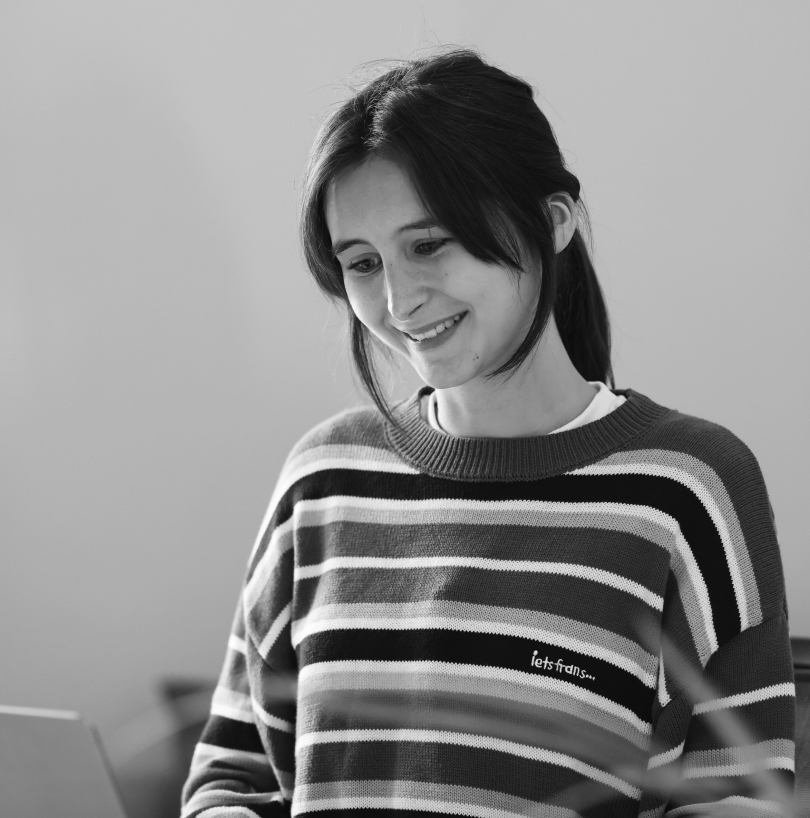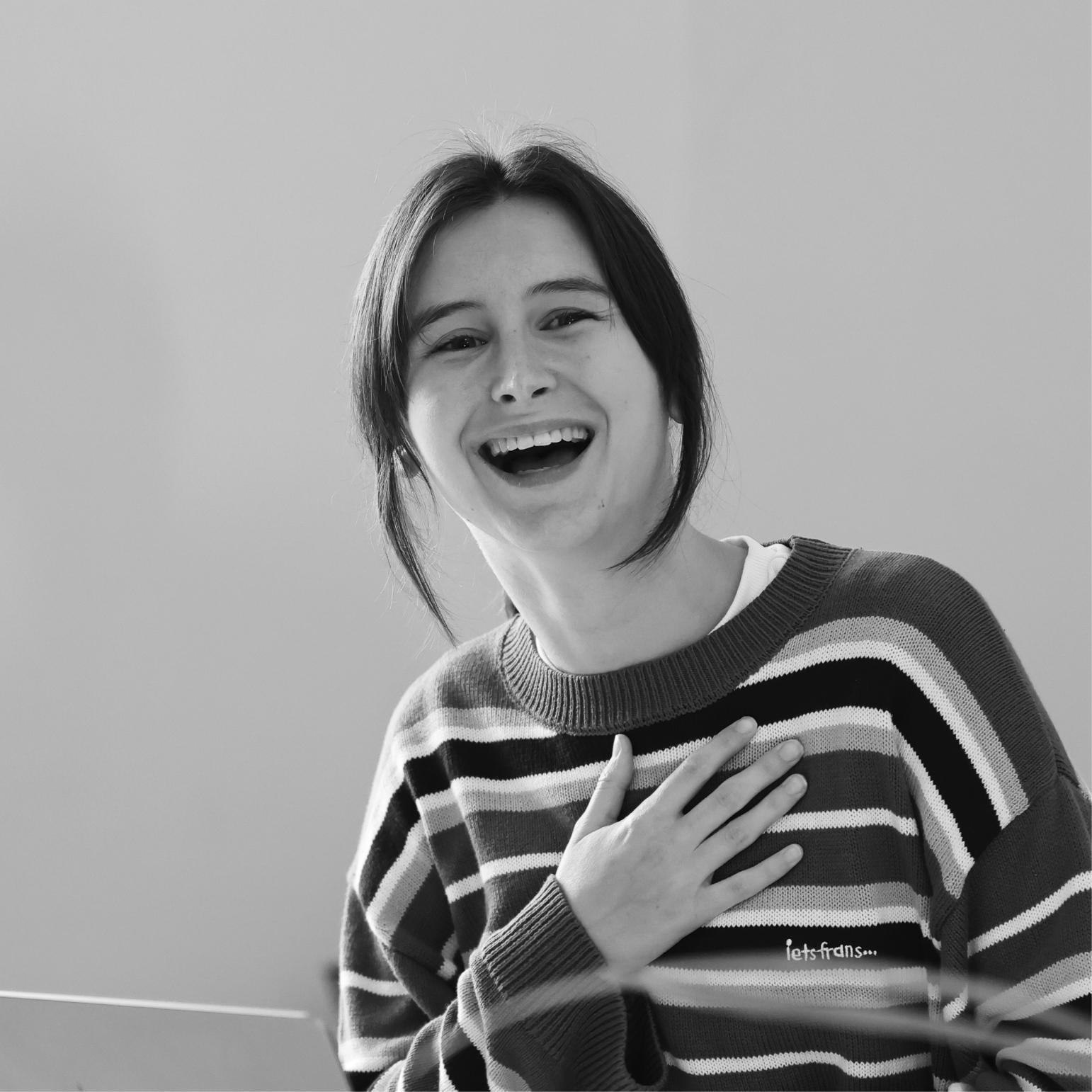
Kicking it with Kim.

Ever wonder what goes on in the mind of a copywriter? Better yet, when two of them sit down together? It sounds like the beginning of a bad joke, but hear us out. Kim sat down with one of our other copywriters and settled in. Read all about what we learned as we found out what makes Kim who she is.
Expertise and approach.
Interviewer: So you’re a member of Ketchup’s Copy team. What does your day-to-day look like?
Kim: My day to day consists of writing various strings of words, and putting them together for various clients in various industries - hopefully in a way that makes sense. Generally, I try to make things sound and flow better. I like to use the phrase ‘verbal branding’, which describes what we do quite nicely. We’re shaping our clients’ brands alongside the designers and the brand managers, and everyone is making an important contribution.
Interviewer: Let’s talk about your expertise and your approach. What do clients usually come to you for, and what are they actually asking for without realising it?
Kim: What our clients want – whether they realise it or not – is for us to tell the story of their brand in one way or another. Even the most innocuous blog, which can seem like ‘content for the sake of content’, is all to show the expertise of a brand and promote its USP. Everything, from the simplest heading to full website copy or product descriptions, all ties back to the brand. It’s all storytelling.
Interviewer: What’s a mistake you see brands make over and over in copywriting?
Kim: Sounding generic. It’s crazy to me that brands go to market without having found their unique voice. You can always tell! When a brand hasn’t found its tonal identity, it sounds robotic. Copy is often the first thing people see, whether that’s from email marketing or on a website, and if it doesn’t create a connection, it’s not going to have the desired effect. I feel that brands are often too shy about trying to make their voice unique. There’s no point in trying to talk ‘perfectly’ or ‘politely’ if the effect that has is causing your audience to ignore you.
Interviewer: And for your approach: if you had to describe it in one word, what would it be (and what does that actually look like in practice)?
Kim: Investigative. It’s so important to know both who you’re writing ‘for’, and who you’re writing ‘to’. Is the lead cold or warm? What’s the end goal? It’s much easier to write once you know all these details. Then, it all comes down to editing.
Interviewer: And where do you think the best ideas really come from when you’re writing – structure, chaos, collaboration, or solitude?
Kim: Collaboration is my inspiration for ideas. As part of Ketchup’s creative team, I take part in creative surgeries where we all bounce ideas off each other. But my best ideas come to fruition when I sit with them myself for a while and let them simmer. In the final stage, I like a bit of chaos, a bit of white noise – that’s where the final flourishes get added; it lets my mind focus and I can really get stuck in.
Point of view and taste.
Interviewer: So, moving on to trends and POV: what trends in copywriting are you quietly ignoring right now, and why?
Kim: There’s a trend right now for social media ads that consist of ‘faked’ text conversations between fictional people. One will ask the other a question, and the other will respond by saying that ‘such and such product is a huge revelation’, and then the first person responds with ‘say no more, I’m on it…’ First of all, who talks like that? It’s such lazy writing, and takes the reader for granted.
Interviewer: What’s something you have a strong opinion about in your field that others might disagree with?
Kim: I firmly believe that copywriters should be ‘in the room where it happens’ from day one of client onboarding. Copywriters need to know the big picture before they start getting granular, and sometimes a creative idea that forms the hook for an entire campaign can rest on a clever line of copy.
Interviewer: What excites you most about writing for brands today, and what bores you?
Kim: When brands are more willing to be a little bit different, to take risks, or be more aware of who they are, the possibilities open up to create great copy. When they’re not, they don’t – it’s a simple equation, really.
Collaboration and Ketchup perspective.
Interviewer: Now moving into Ketchup-specifics: how does being part of a multidisciplinary team at Ketchup shape your work?
Kim: It sheds a lot of light on trends that I might not otherwise know are happening – we have such diverse expertise here, and everyone brings a different perspective to the table, which is fantastic in a creative role.
Interviewer: Absolutely. And what’s something clients might not realise they get access to by working with Ketchup?
Kim: Not only a team of experts that are constantly communicating, collaborating etc, they get to work with a bunch of people who genuinely love what they do. Everyone here are Ketchup is passionate about their craft; it makes coming to work a real joy.
Personality and colour.
Interviewer: Now for the personality stuff: what does your brain do when you’re not working?
Kim: It navigates battles with my 4-year-old. It briefly judges copy on print ads on trains, buses, and cities as I commute around for pickups and drop-offs. It’s constantly solving problems – or trying to.
When I do get some downtime, it emits sparks of ambitions to become a best-selling novelist, write successful screenplays, change people’s lives with yoga, and become a wizened brand strategist. But Rome wasn’t built in a day.
Interviewer: What’s a habit or ritual that helps you reset creatively? In other words, do you ever stop?
Kim: Yoga and meditation help a lot – it’s just giving myself permission to do it. But when I do, it can cultivate spontaneous creativity. Plus, going for runs or traveling can introduce fresh mindsets as your surroundings shift. Sometimes we need to be brought back to life from our routines, so I try to cut old habits out or add new ones. This creates different neural connections in our brains – so it’s a literal reset.
Interviewer: And finally, if you weren’t doing this, what would you be doing instead?
Kim: In another life, I’d have been a successful architect, with a house I’d designed in all my favourite cities in the world. They’d all be unique and original, and I’d be able to travel between them and show my son all my favourite places.
To learn more about Kim, or any other members of the Ketchup Crew, visit our Team page. We’ve got plenty of content from videos to interviews like this one.