
Sitting down with Sarah.
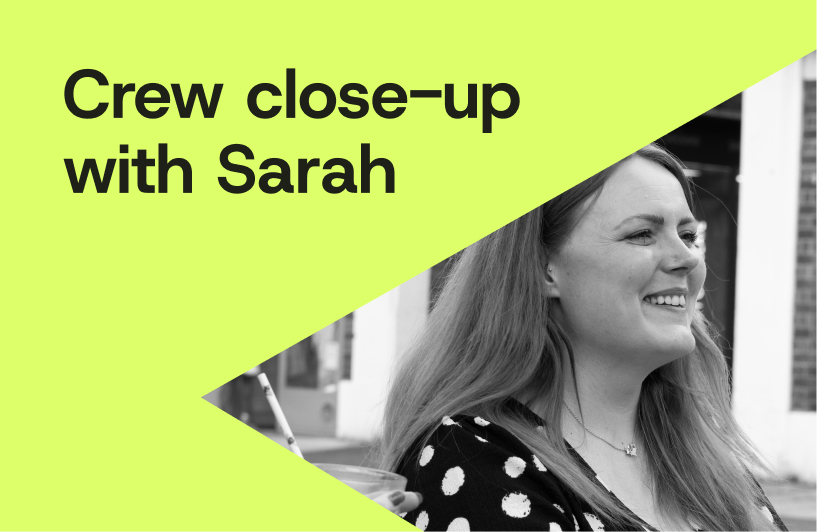
One of our copywriters sat down to get to know Sarah a little better, like what she accomplished before Ketchup, how her mind works, and more. As the Senior Brand Manager for Ketchup, she oversees the activity between the Brand Managers, Marketing Coordinators, and the creative teams.
Keep reading to dig into a seriously interesting close-up.
Expertise and approach.
Interviewer: What do clients usually come to you for when something isn’t working, and how do you diagnose what’s really going on beneath the surface?
Sarah: A lot of clients come to me with an individual problem. They might say, “we need more blog posts”, or “we need to match our social media to this other brand’s”. But often, the problem lay with the strategy – or lack thereof. Or even just a lack of clarity around their goals.
So I would step back and look at their strategy for the year. I’d find out their commercial objectives, things that aren’t working, and things they’ve tried before. I ask quite a lot of questions because what people say obviously can reveal a lot more than the original brief. So, it's always good to get on a call with someone rather than just via email.
I can then separate what they believe the problem is from what is actually showing in the patterns of their marketing activity, to then get to the nitty-gritty. We want to solve that problem, not just produce more work for the sake of it.
Interviewer: What did you do before this, and what experience has shaped the way you approach brand strategy and leadership today?
Sarah: I’ve worked in marketing for about 15 years, both in-house and at agencies. I worked as the Group Marketing Manager for the Watches of Switzerland Group, a luxury watch and jewellery company. Working there taught me that every detail matters, and that strength in branding is key. We were promoting the same things, but we had to differentiate them between different brands, and that showed me how branding can really set you aside from your competitors. Consistency matters much more than what I call ‘popcorn marketing’ (doing things as the ideas pop into people’s heads), which is more to the reason why getting your BAU sorted is really important. So working agency-side and in-house has given me both perspectives: I understand commercial and internal pressures that clients face, but I also know how to bring specialists together on the agency side to make sure our work is super strong and that we're delivering ultimately what the client needs.
In my leadership style, I try to combine high standards, but with warmth. I try to be someone who can be trusted, supportive, able to contribute, and who can make people feel empowered.
Interviewer: As a Senior Brand Manager, how would you describe your approach to leading a project from the initial brief through to the final execution?
Sarah: I see my role as holding the thread from beginning to end, but at a level that still gives the creative teams space and freedom to make things better. I like to make sure the brief is really clear, so we all know exactly where we’re pulling. Being able to think both strategically and creatively is, I’d say, a superpower of mine. I’m quite structured in the way I work, but I like to make sure that structure doesn’t stifle the actual work.
Then of course, I like doing regular check-ins so we’re all on the same page, and not over budget. So I see my job as holding the thread from start to finish, while providing the space for the teams to improve the work and feel empowered in their roles.
Interviewer: Where do you think the best ideas really come from when you’re working: structure, chaos, collaboration, or solitude? How do you create the conditions for your team to get to them?
Sarah: Probably a combination of all of them. Structure gives you the right problem to solve; collaboration gives you a new perspective that you wouldn’t necessarily reach on your own, but solitude then gives you space to properly think on it all. A lot of times, people don’t have the confidence to speak out so I think solitude allows them to think at their own pace. That way, we can get the best out of them in the way that works with their brain.
Point of view and taste.
Interviewer: Moving on to trends and POV: what trends in marketing are you quietly ignoring right now, and why?
Sarah: I’m really wary of any trends that encourage brands to borrow a personality when it isn’t true to the brand behind it. If it’s based on one person, for example, what if that person leaves? The brand isn’t future-proofing itself in this case. If brands are leaning into one brand, person or style, that’s their entire marketing channel, as it were, dead in the water unless you have a real marketing strategy that it can stand on.
I think what can work really well is when brands show they can poke fun at themselves, not take themselves too seriously, and have fun, etc.
Interviewer: What’s something you have a strong opinion about in brand marketing that others might disagree with?
Sarah: The element of brand consistency and what that should mean… so on the flip side of my last answer, I think consistency can be also interpreted as rigid repetition. You’re not really helping your brand if it’s not recognisable when you adapt to different audiences and channels. Your brand should be able to flex a little without losing itself. If it can’t, then your identity isn’t strong enough.
Interviewer: What excites you most about managing brands today, and what do you think the industry sometimes overcomplicates?
Sarah: The opportunity for brands to build more direct relationships with their audience now. Back in the day, it was quite tunnel-visioned. You only had a few physical touchpoints. With socials now, there are so many more ways to create useful experiences, whether visual or audio, and there are a lot more spaces now where brands can carve out their niche.
That being said, I think the pressure of needing to be everywhere all at once can be overwhelming. The best way forward is understanding the ‘why’s’ with your customers, and answering their needs in the spaces where you’ll reach them best.
Collaboration and Ketchup perspective.
Interviewer: How do you bring together the different disciplines at Ketchup to make sure that strategy, creative, and execution are all pulling in the same direction?
Sarah: It all starts with giving everybody the same understanding of the problem. Not necessarily the same brief because their outputs will be different, but the same understanding of what we're trying to achieve, that shared objective.
If each department gets different information, our collective understanding won’t be cohesive enough to answer the initial ask. So establishing that goal and solution we want – and continuing to check in on it – is crucial. It’s easy for someone to veer off in isolation, which is why collaboration matters here.
Interviewer: What do you think makes a multidisciplinary team work particularly well, and what role do you play in making that happen?
Sarah: It works well when everyone recognises how their expertise will help, and how it interacts with everyone else's jobs. When you recognise their strengths and individual skill sets, you learn that you have aces in many places. If you know someone is stronger in a certain area, it’s giving them more ownership in that area.
It’s also making sure quieter voices have a space too, not just the louder voices. As I’ve gotten more responsibility, I’ve recognised that quieter voices might need more time to feel ready to speak out on their ideas. It’s always about bringing it back to the room, essentially.
Personality and human side.
Interviewer: Now for the personality stuff: what does your brain do when you’re not working?
Sarah: It never really goes quiet. I’m usually planning something or another! I’m moving soon, buying a house with my partner, so I have lots of Pinterest things saved up to do with decorating the new home. But I have two sprocker spaniels, who are great at forcing me out of my head, thankfully! We might go to a pub, or a nice garden centre.
Interviewer: What’s a habit or ritual that helps you reset? In other words, do you ever stop?
Sarah: I’m really big into skincare; my skincare routine is like a ritual for me. I have an aromatherapy diffuser that I use while I listen to my podcasts, and every Sunday my dogs also get groomed, and have their teeth brushed. It’s a really nice way to end one week and start a new one. I’ve learned that taking care of yourself is really important.
Interviewer: And finally, if you weren’t doing this, what would you be doing instead?
Sarah: I feel like it would be something to do with writing and storytelling because I've loved English since I was little. I did fashion courses and thought I’d end up being the editor of Vogue, so if I wasn’t doing this I might’ve gone down the publication route. I think my common threads are bringing ideas together and also appreciating the beautiful things in life, like fashion, interiors, and beauty.
Our copywriter concluded the interview, but you can find out more about Sarah and our other team members on our Meet the team page.