
BrightonSEO 2026, as explained by our SEO expert.
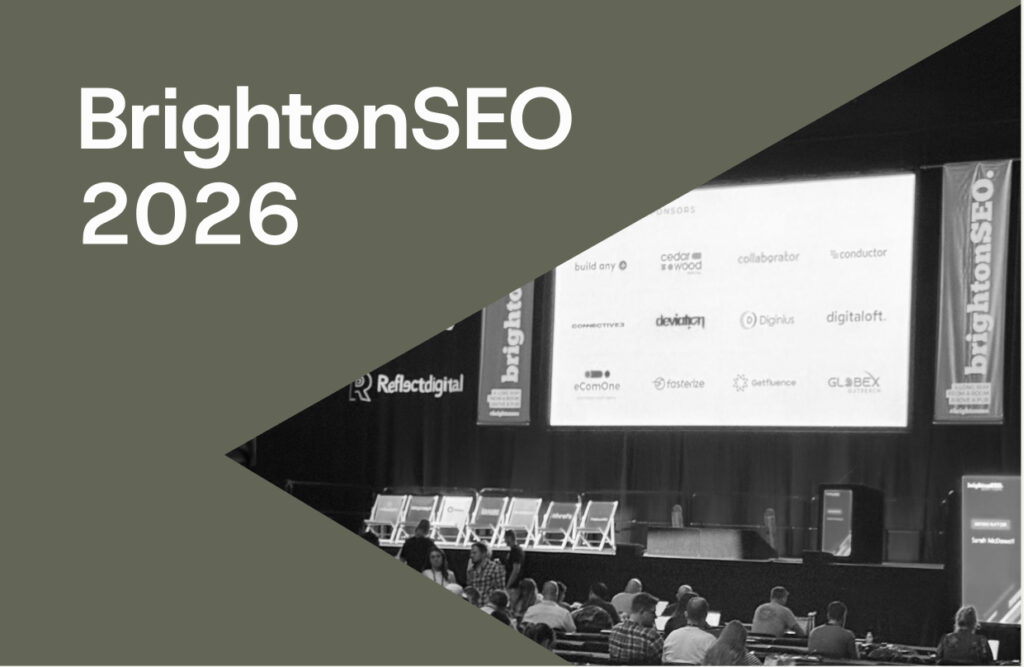
This year’s BrightonSEO felt bigger than ever. The queues into the Brighton Centre on both days stretched right along the seafront! It was easily 100+ people deep before the doors had even opened.
My immediate thought was (forgetting that I needed more suncream than originally planned) - about how many people were looking to learn, and how many people were looking to confirm they were doing the right things. Most people attend conferences to upskill, but upskilling can also be getting confirmation that you are doing the right thing. You become more confident in what you are doing, and as a result, you build strategies with more conviction. My mind did then wonder to how much the conversation would be around AI…
Because right now, AI is fuelling interest across Search, eCommerce and Marketing in a way I’ve never really seen before. It’s no longer just an SEO conversation. Agents, automation and AI workflows are becoming relevant to everyone, from practitioners through to C-Suite teams trying to understand what all of this means for their businesses. I wanted to understand how much expectation management would be required when talking to clients, and what insights I could give them for their internal reporting.
And once the talks started, that instinct felt completely right…
Inside the sessions
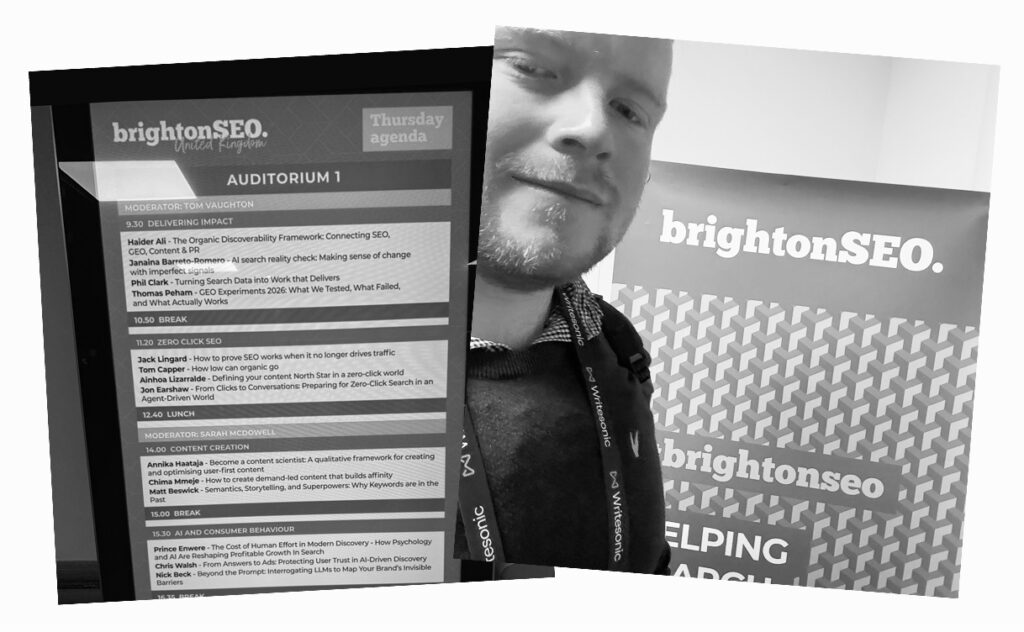
AI came up everywhere, from technical SEO talks to content sessions and even paid media discussions. Even the conversations happening between sessions in the corridors – it became the thread running through the entire conference.
That said, what I found most interesting wasn’t the usual “AI is changing everything” rhetoric. Most people in SEO already know that. What stood out to me was how much the conversation has shifted from experimentation to implementation.
Last year, it felt like everyone was asking: “How do we start using AI?”
This year felt more like: “How do we actually use it properly?”
That’s a very different conversation. One talk that really stuck with me was Tom Winter’s session. He said: “When bots get it wrong, we say they’re rubbish. When people get it wrong, we call it experience.”
That landed with me because it reframed hallucination – when generative AI models produce factually incorrect, nonsensical, or entirely fabricated information, but present it with absolute confidence – in a much more realistic way. Because we know Large Language Models get things wrong. OpenAI openly acknowledges hallucinations happen; but the bigger question now isn’t whether mistakes happen, it’s how we build accountability around them:
- How do we create proper guardrails?
- How do we stop AI becoming unchecked output?
- How do we use it responsibly without sacrificing quality?
For me, the answer is pretty simple: AI works best when it scales human thinking, not when it replaces it.
In SEO terms, that means using automation where it actually creates value. Things like schema implementation, canonical checks, technical deployments and repeatable tasks all make sense. They save time and create efficiency.
But the human part still matters enormously. It’s all in the strategy, the validation, and the problem-solving. It’s the understanding of intent, and even the ability to spot nuance. That’s still where the real value sits.
Claude has entered the chat
Another thing I couldn’t ignore across the event was how often Claude came up in conversations. Claude Code especially seemed to dominate the discussions amongst technical SEOs and developers.
People kept mentioning stronger reasoning, better coding support, deeper thinking, and deployment capabilities through SSH workflows
For me, that signals something bigger happening within the industry. We’re starting to move out of pure experimentation mode and into more established workflows and systems. “Good in = good out” no longer just applies to prompts. It applies to the systems, tools and processes we choose to build around.
A big takeaway: non-linear search
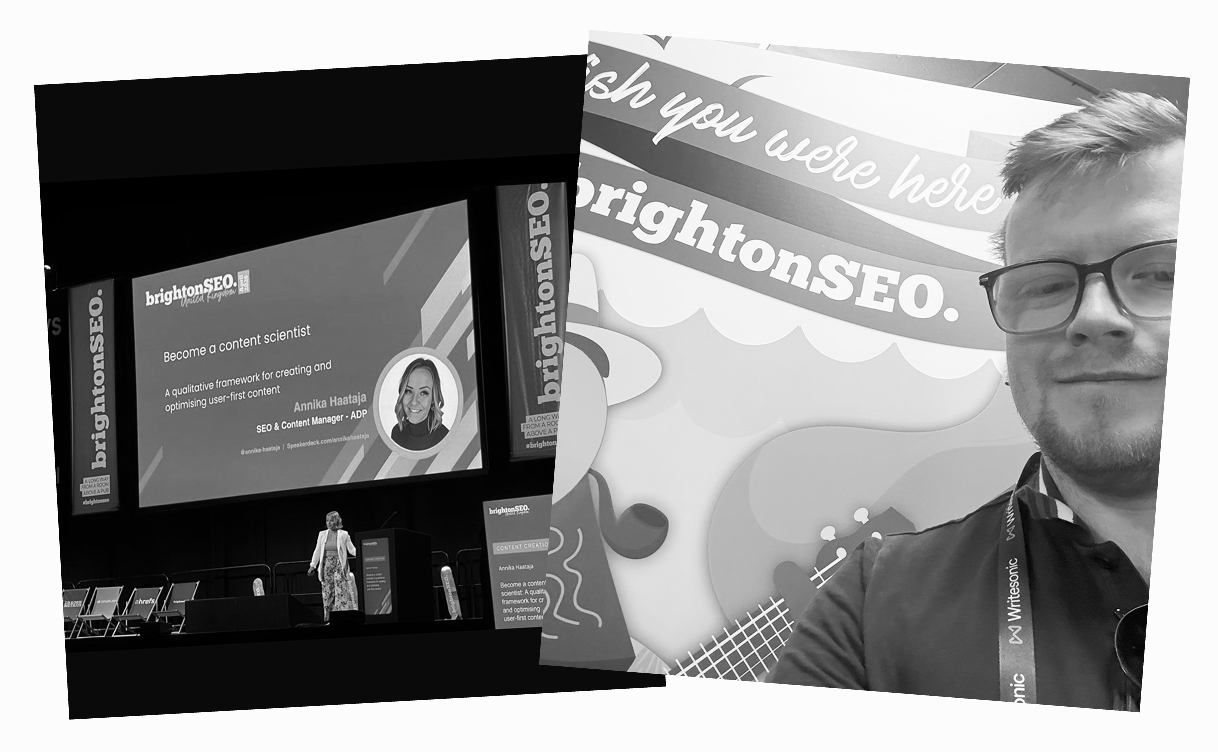
One of the biggest strategic takeaways for me came from Dr. Pete Meyers’ closing talk around “fan-out” queries: search behaviour is changing shape. People don’t search in straight lines anymore.
Someone might start with a single question, then compare products, branch into supporting topics, watch tutorials, look at reviews, ask follow-up questions and bounce between platforms before making a decision. Search has become much more layered and interconnected, and the SERPs are reflecting that.
We’re now seeing environments made up of:
- Organic listings
- AI Overviews
- Topic clusters
- Video
- Forums
- Multi-step discovery journeys
- Hybrid search experiences
The implication for SEO feels pretty clear: less obsession with isolated keywords, and more focus on intent networks, prompt clusters and user journeys. That’s something we’re already thinking about heavily at Ketchup.
Do keywords and rankings even matter?
Static keyword lists are starting to feel less useful on their own. I’m far more interested now in mapping user problems, understanding intent pathways, building stronger content ecosystems,
and thinking about discoverability beyond traditional rankings.
I’m also thinking more about how reporting evolves alongside this. SEO reporting can’t just stop at rankings anymore. We need to think about: AI visibility, citations, AI Overview appearances, brand mentions, platform visibility, and how brands show up across broader search journeys.
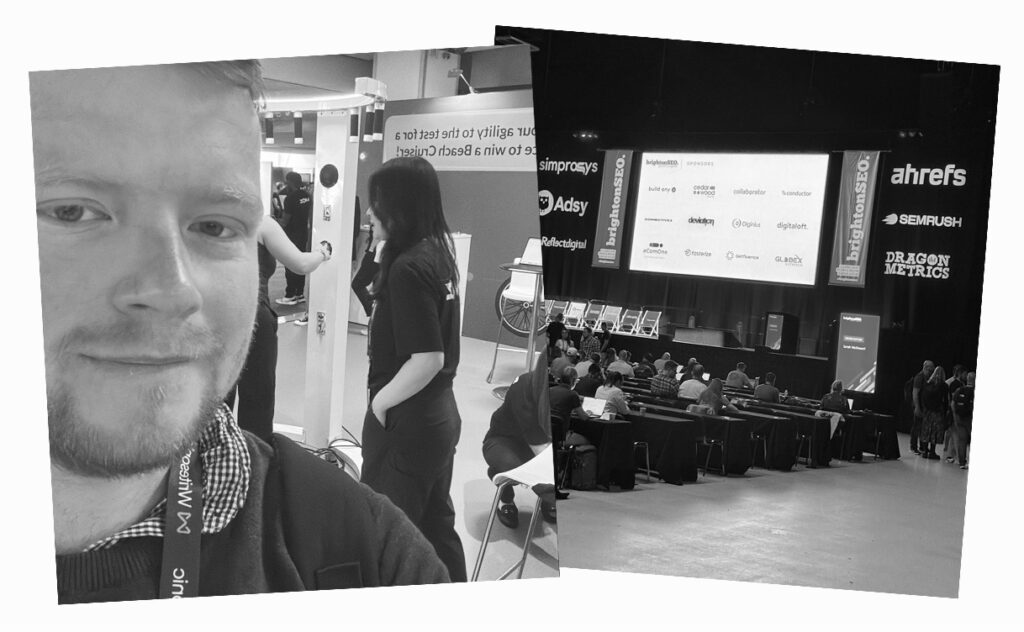
At the same time, one thing BrightonSEO reinforced for me is that the fundamentals still matter massively:
- Technical SEO is still doing the heavy lifting.
- Site structure still matters.
- Content quality still matters.
- User experience still matters.
The difference now is that search has become broader, messier, and far more interconnected than before. I’ve spent more than 10 years working in SEO, and the last few years have probably seen the biggest shifts I can remember.
The big picture: a changing playing field
The old question always comes back eventually: “Is SEO dead?” But honestly, BrightonSEO left me feeling the opposite. If anything, it feels like SEO is becoming more interesting. We can test, measure, learn, and experiment more.
Search is evolving quickly, but there’s still enormous opportunity for brands willing to adapt properly. The playground is still there. It just has a lot more moving parts now.