Getting to know Graeme.
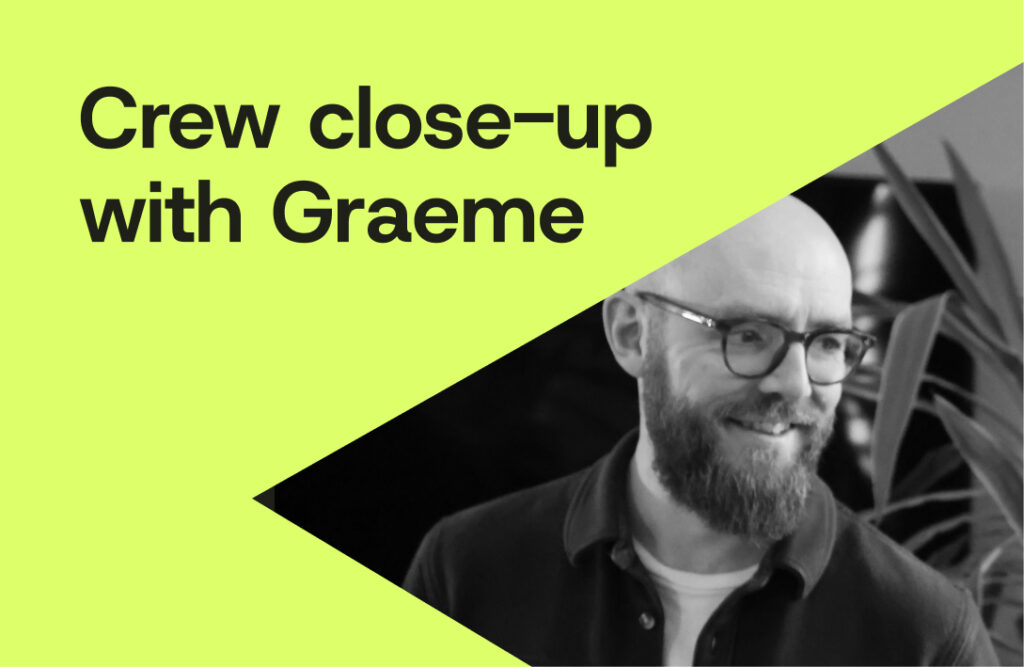
Wondering what makes a copywriter tick? Graeme sat down with one of our other copywriters and made himself an open book – and the results are now in. Read all about what we uncovered (some of it is shocking) as we explored the different facets of what makes him who he is.
Expertise and approach.
Interviewer: Let’s start by getting to know your expertise, and what your approach would usually be. What do clients usually come to you for when something isn’t working, and what are they actually asking for without realising it?
Graeme: Copywriting covers a range of things. From long form blogs and research pages, to shorter things like brochures or even a sign on a stand. What the client doesn't necessarily know when they come to Ketchup is how copy can shape and encapsulate the message they want to get across. Great copy can be transformative, defining how people think about a brand as a whole.
My job as Creative Copy Manager at Ketchup Marketing Agency is to promote all that as a positive thing for our clients. To showcase copy as something they should want to get more from, and as something that can be a massive benefit to their business as a whole. Because copy has the potential to take a business in new, exciting directions.
Interviewer: Sounds great. What’s a mistake you see brands make over and over in copywriting?
Graeme: Relying on platitudes or cliches. We could talk about the way some agencies present themselves as an example: “We were the best agency, we work with the best brands, we can do the best for you, etc.”
Any agency could say that. What brands need is to get to the heart of what their USP is.
Whatever a brand is selling, it’s not the product they need to talk about, but the problem the product solves. That’s where great copy comes in.
Interviewer: Totally agree. And for your approach: if you had to describe it in one word, what would it be (and what does that actually look like in practice)?
Graeme: I would describe it as “holistic” – and by that, I mean that I like a brand's copy to work no matter which way you’re interacting with it. Whether it’s copy written for a sign or a social post, it should have the same impact, and very clearly be from the same place.
Interviewer: Consistency is important; that’s a great way of testing it. And where do you think the best ideas really come from when you’re writing – structure, chaos, collaboration, or solitude?
Graeme: Always collaboration. I love working with creative people. Someone might have the bones of an idea, and then someone else can come in, take that little kernel and pop it into something great.
A brilliant piece of copy that is born of many creative minds can be the hook an entire campaign hangs on. It’s less likely that one person will have that great idea in a vacuum.
Point of view and taste.
Interviewer: So true – instead of one creative mind you get all of us. So, moving on to trends and POV: what trends in copywriting are you quietly ignoring right now, and why?
Graeme: Something I hate is the headline statement “here’s why:” It’s the insinuation from the writer that they’re the expert, you’re not, and they’re going to explain the thing to you like you’re five. It just feels so condescending to me, and it makes me scroll straight past.
Interviewer: What’s something you have a strong opinion about in your field that others might disagree with?
Graeme: I’m a big proponent of the Oxford comma. My thinking is, let’s let things breathe, and let the reader mull an idea as they come to it.
Interviewer: That’s too controversial, Graeme - reel it in! What excites you most about writing for brands today, and what bores you?
Graeme: Working out what the problem is that a brand is solving for its audience, then getting to the heart of that; connecting to an audience at that fundamental level. That’s always a buzz.
What bores me: when a client is looking for ‘sell, sell, sell’ language. Anyone can write that kind of copy – and it’s always the same.
Collaboration and Ketchup perspective.
Interviewer: Thanks for that. Now moving into Ketchup-specifics: how does being part of a multidisciplinary team at Ketchup shape your work?
Graeme: One of the things I enjoy at Ketchup the most is the fact that expertise is so highly valued. If I have a question about something specific, there is a person I can ask who is an expert in that field. Also, we have great snacks.
Interviewer: Absolutely. And what’s something clients might not realise they get access to by working with Ketchup?
Graeme: Everyone is a full-time specialist. For example, we have SEO specialists rather than someone just “doing the SEO” while wearing other hats, like you often get at other agencies.
Personality and human side.
Interviewer: Now for the personality stuff: what does your brain do when you’re not working?
Graeme: I always want to come across like I know everything – out of a kind of playful curiosity, not arrogance (honest!). I’m a massive news hound, but it goes further than that. I think of random footballers from the past maybe three times per day. I immediately have to look them up and remind myself of their stats, their clubs… Some might say that’s a bit weird; I like to think I’m just always thirsty for knowledge.
Interviewer: What’s a habit or ritual that helps you reset creatively? In other words, do you ever stop?
Graeme: I paint tabletop gaming miniatures, and it’s like meditation for me. When I’m painting, my brain isn’t looking for anything more. I can just do it for hours and hours, screen-free.
I also play hockey, but that’s less creative, more destructive!
Interviewer: And finally, if you weren’t doing this, what would you be doing instead?
Graeme: There’s always “lottery-winner and retiree at 40”. If that’s not an option, I’d probably be running a vinyl record and book shop with my wife – and best friend – Sarinda.
With that adorable concluding answer, we’ve begun to round Graeme out as a person.