
Here’s what we learned about AI at The DRUM Live.
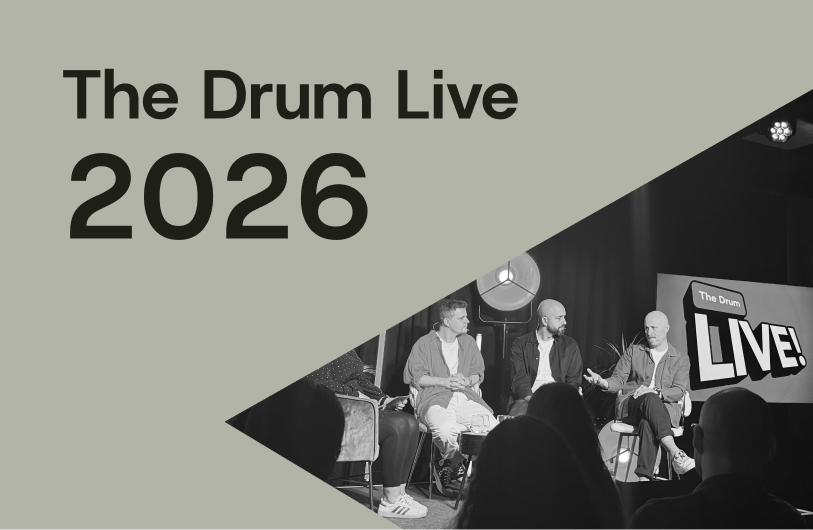
The Drum Live 2026, as told by Sarah and Lloyd.
There was never going to be much chance of getting through two days at The Drum Live without hearing quite a lot about AI. To be fair, that was kind of the whole point in going. From agentic AI and synthetic audiences, to the impact it’s having on agency relationships and marketing teams, the subject cropped up in session after session.
What was more interesting, though, was the conversation around what all of this means for the people actually doing the work.
Ketchup Brand Managers Sarah Potter and Lloyd Bijou headed to The Drum Live to see what was happening across the industry, and came back with plenty to think about. Here are some of the things that stuck with them.
AI needs a decent brief too.
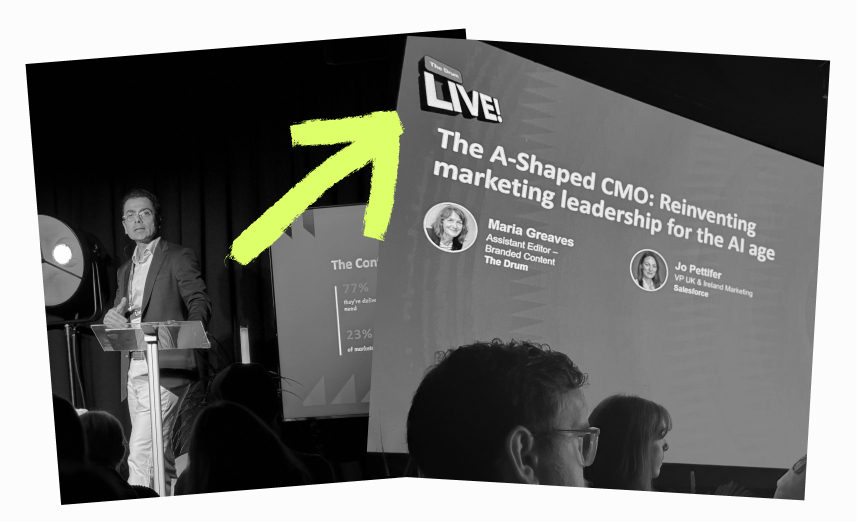
In one of the early sessions on day one, we were given some food for thought. Should we be thinking of AI less as a magic box, and more like you would a high-performing colleague?
Think about it: If you brought someone new into your team, you wouldn’t give them a one-line instruction and expect them to produce their best work. You’d explain what they were there to do, give them some context about the client and the problem, show them what ‘good’ looks like, and give them feedback as they went.
The same principle applies to AI. The quality of the output depends heavily on the quality of the context, guidance and examples you give it.
There was also a useful distinction between the jobs AI is well suited to and those where human judgement matters more. Repeatable and patterned tasks are an obvious place for AI to help. Deciding which direction to take, what a client really needs, or whether an idea is actually any good or not is a lot harder to automate, and the results you get when you try are usually cr*p.
So really, you want to stop asking simply, “can AI do this?”. Instead, consider which bits of the process AI could do and do well, so that you have more time to spend on the thinking that makes the work better overall.
Perhaps we should stop doing some things.
In another session, we heard a similar point about processes. If a process is inefficient, putting AI into the middle of it is probably not going to solve anything at all.
Before introducing another tool or automation, it’s worth asking what we’re actually trying to achieve, and whether the outcome is even worth it in the first place. If something requires a bit of lateral thinking, then it definitely needs a human to be involved. But then there are the things that could be automated – monotonous bits that just need to be ploughed through.
Lastly, you’ve got the things that are only still being done because “that’s the way we’ve always done it”. That is, honestly, the worst reason to keep doing anything. It’s also probably the easiest category to overlook. There’s a tendency to see new technology as a way of increasing output, when sometimes its real value is in removing some of the work that gets in the way of better thinking.
When everyone has 100 ideas, choosing one matters.
This came through in several different sessions. As AI makes it easier to produce content, ideas, and creative variations at scale, partnering with an experienced content marketing agency ensures your message stands out from the noise. The useful skill is knowing which idea deserves attention.
That puts a premium on judgement, curiosity, creativity, and understanding. You have to really know a to build the right brand strategy, and only people can do that. There was a lot of discussion here about conviction: if brands can create an endless supply of generic content, having a genuine point of view becomes increasingly valuable. So don’t be afraid to be opinionated – it’s what sets us apart from the machines.
Make something people want to talk about.
Another idea that we picked up on was ‘talkability’, which was another way of expressing the idea of word-of-mouth. Has a piece of marketing actually made enough of an impression for somebody to mention it in conversation? That’s talkability. We have plenty of established measures for reach, engagement, likes and shares, but they don’t necessarily tell us whether a campaign has become part of a conversation.
Discourse is much more fragmented than it used to be. We don’t have a mono-culture where everyone sees the same ads and hears the same songs. Smaller communities exist online across social media marketing channels, in spaces like WhatsApp groups, Discord chats, and niche forums, while real-world events are more and more specialised, and cater to very specific audiences.
For brands, that raises an interesting proposition: sometimes the thing people remember and talk about may be an experience, a community, or an idea rather than just another piece of content.
The audience isn’t going to come looking for us.
Another theme that came up repeatedly was the need to start with the audience and the environment they’re actually in. You've got to lean into what people are already doing, rather than try to tear them away from what matters to them.
Where are the people you want to reach spending their time? What are they consuming? How do they behave on a particular platform? What does ‘good’ content look like there?
In the past, you might have created one piece of content and adapted it for every channel afterwards. DRUM Live made a good case for doing that adaptive thinking earlier, so that the audience, platform, and objective influence the work from the beginning.
There was a similar point about the tension between relevance and consistency. Marketing teams are under constant pressure to react to whatever is happening right now, but brands still need some sense of continuity if they’re going to become distinctive and recognisable.
The agency relationship is changing.
Day two brought some really interesting conversations about the relationship between brands and agencies. Research from 300 marketers suggested that marketing costs are increasing across the board. For brands, building larger internal teams might not be as cost effective as bringing an marketing agency into the room.
Brands are increasingly looking to ‘full stack marketers’, and 69% of them expect AI to make them more profitable. That’s interesting, especially when considering the backlash whenever brands put out AI-generated content. For agencies this research presents a big opportunity to go beyond the brief, establish a shared mission, bring the expertise that the client doesn’t have internally, and be confident enough to suggest new ways of doing things. That’s what a proper agency partnership can do: challenge tired thinking, and bring more expertise to a problem that needs solving.
The fundamentals still matter.
For all the discussion about AI, data, creators, and new technology, there was plenty of evidence that the basic principles of good marketing haven’t gone away.
The session on Center Parcs was a good example. Its CEO, Sara Holt, made the point that you can’t market your way out of a bad product, and said she would put £10m into improving the guest experience before putting it into paid media. The business also talked about the importance of brand health, customer experience and long-term measurement rather than relying solely on short-term campaign metrics.
That long-term thinking came up elsewhere too. There was discussion about the difficulty of connecting huge amounts of marketing data to anything genuinely meaningful, and the need to define what success actually looks like before getting lost in metrics.
And perhaps that’s the most useful thing to bring back from a conference like The Drum Live. There’s plenty of new technology to understand and plenty of new ways of working to consider, but the job still starts with understanding the audience, getting to the heart of the problem, making something worth paying attention to and having the confidence to challenge your own assumptions.
AI can certainly help with some of that, but it can’t remove the need for people who know what they’re doing.
Learn more about our approach to AI and search.