
The importance of SEO for small businesses: 9 SEO benefits.
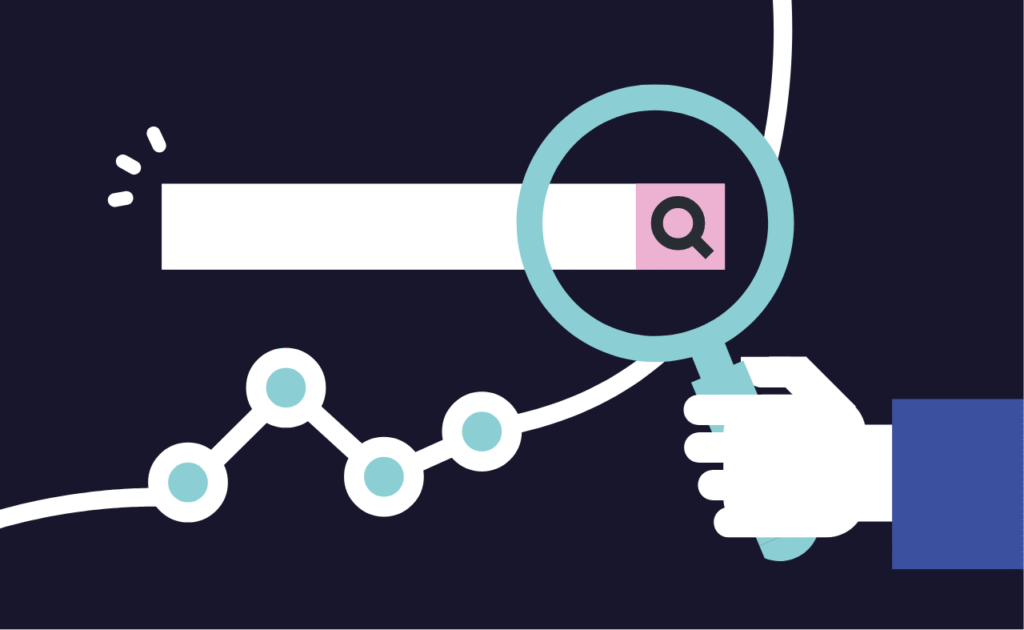
To understand the importance of SEO for small businesses, try and think of Google and other search engines as a town...
The bustling high street? That’s page 1. That’s where people find you even if they don’t know you exist and aren’t actively looking for you specifically. On the contrary, you could have the quaintest little café or shop, but… if it’s located on a tiny street far away from the town centre (aka page 9)? It’s highly unlikely that someone will bump into it.
The good thing about SEO is that, when done right, you can achieve high street results without physically moving your actual location. Trust us, we know a thing or two about that: our marketing agency is based in a converted barn in a rural area, but still reaches tons of people!
However, SEO is also plagued by old clichés and outdated misconceptions which lead to unreasonable hostility towards it or popular blasphemous affirmations. You might have heard things like ‘SEO is dead’ or ‘SEO makes you sound like a robot’.
No. It isn’t and it doesn’t.
Let us clear things up for you so that you can familiarise yourself with the importance of SEO for small businesses and start making the most of it to grow yours.
What is SEO? (No jargon, please!)
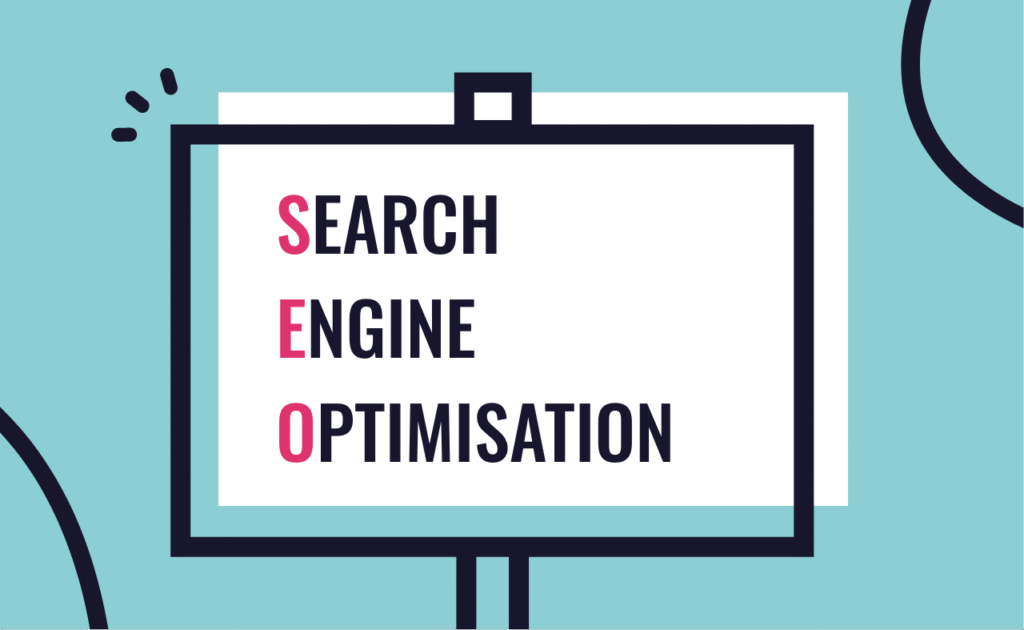
SEO is an acronym for search engine optimisation, which simply consists of the practice of increasing the quantity as well as the quality of your website traffic through organic search engine results.
Here, ‘organic’ is a magic word meaning ‘free’, as SEO has got nothing to do with the paid ads that you see in the SERP (search engine results page) when you type in a query.
This practice also consists of different strategies. After all, if you think that Google (which accounts for 73.34% of all desktop searches and 92.81% on mobiles) has over 200 ranking factors, you can see why SEO must focus on several areas in order to succeed.
Keywords are… well, key. However, SEO is not ‘just about keywords’.
As well as targeting the right ones for your business and industry, it also involves:
- creating excellent and relevant content
- updating your website regularly to ensure freshness (for example, by blogging once a week)
- building backlinks that show your authority
- guaranteeing an optimal UX (user experience).
SEO is for both search engines and customers
As you can see, nowadays SEO focuses on content and strategies that are created with both search engine bots and human customers in mind. Not just one of the two.
Basically, if you’ve ever heard something negative about SEO, it can only be because of black hat techniques. This ‘dark SEO’ relies on outdated practices such as keywords stuffing or link farms, which are websites that offer no value because they are created with the sole purpose of building backlinks.
None of that here.
You should only focus on white hat SEO, which respects the search engines’ terms of service, your website’s integrity, and the actual UX.
Be an SEO white wizard, not a dark lord!
We also want to stress that SEO is an ongoing process, not a one-off thing. ‘We’ve done the SEO of our website two years ago, so we don’t need to worry about it anymore’ is like saying ‘I’ve watered my plant last year, now I can just leave it’.
Yes, technically you can. But it will die.
The 9 main benefits of SEO for small businesses
SEO is important for everyone but is vital for small businesses like yours. Why? Because we doubt that, no matter how well you’re doing, you can already afford to spend thousands of pounds in ads or that you have the same brand awareness as big, well-established companies.
Think about it. If you need to look up something that involves that dark fizzy drink, you’re just going to type ‘Coca Cola’, right?
However, as a new and small business, you’re much more likely to be found by potential customers when they type keywords that are related to your industry, products, or even your type of business ‘near me’.
But let’s show you in more detail how it all works and why you simply can’t afford to overlook this highly effective marketing technique. Here are nine practical examples of the importance of SEO for small businesses.
1. It helps new customers find you
Since we’ve already touched upon it, let’s start with the most obvious one. Hopefully, you already have a few customers, but, if you really want to grow your small business, you need to attract more.
This goes back to the initial high street metaphor. If you’re hidden away, whether it be in a back alley or page 9 of Google, they won’t find you.
Optimising your website for search engines allows you to move closer and closer to the coveted first page or, who knows, even the golden first position, which gets 33% of all traffic.
2. You can make the most of local SEO
As well as targeting keywords that are relevant to your product and industry, the importance of local SEO for small businesses lies in the gold mine of local searches.
Did you know that, in two mere years, Google has reported a 900% growth in mobile searches for terms like ‘near me today’?
That’s why making sure that search engines are well aware of where you’re based, together with the fact that you’re clearly the best in your industry, will highly benefit your small business.
When someone searches ‘best [your business type] near me’ or ‘best [your business type] in [your city]’, you will be among the first, if not the first, to show up.
3. It attracts your target audience

Remember when we said that SEO is about increasing the quantity and quality of your website traffic? When talking about search engine optimisation, most people seem to focus on the first part, thinking that we should only care about getting thousands of hits.
However, the quality and relevance of your traffic are just as important.
If someone is googling ‘Amazon’ because they’re looking for the popular e-commerce website, there’s no point in you reaching the first position in the SERP if you offer trips to the Amazon forest.
Or, if you sell products that are aimed at middle-aged homeowners, why would you want young students currently sharing an accommodation with three other people to find you?
SEO doesn’t mean that everyone will find you and know about you. It means that your target audience will.
For example, if you blog on your small business website (do it!), you can write articles that target customers in different stages of the sales funnel. That way, you can attract your audience in the right way for them at that specific moment, facilitating conversions.
Which brings us to the next point...
4. SEO helps you generate more conversions and sales
As we said, more traffic doesn’t necessarily mean higher conversion rates. However, because we’ve already established that SEO is about bringing the right traffic, it shouldn’t come as a surprise that it does result in that favourable outcome.
You’re basically reaching more people who are already interested in your industry, your products, or in what you do.
For instance, if you’re getting some traffic from blog posts that are aimed at a specific stage of the sales funnel, you’re making it even easier for these leads to slide right to the bottom of it and press that buy button.
5. SEO helps you increase your brand awareness
When you target the right keywords or blog about topics that are relevant to your industry, users will see your company name more and more often on search engines.
The more times they see it, the easier it will be for them to recognise it and subconsciously create a positive sense of familiarity, one of the driving forces in marketing.
This obviously builds your brand awareness, which is essential as a small business since it usually takes around five years to establish it.
Plus, it helps build trust. If your website or blog posts keep coming up in industry-related searches, you’ll be perceived as an expert in your field, even as a humble start-up.
6. It results in an efficient, user-friendly website
Would you recommend a restaurant to your best friend if the food is good but, the last time you went there, you found the menu difficult to read, the waiter took over half an hour before getting your order, and the music was terrible? Probably not, unless you’re secretly plotting revenge on this so-called friend of yours.
Same with search engines.
While they obviously care a lot about excellent and relevant content, they’re not going to show it to their users if it’s located on a website that hasn’t resulted in a positive UX for previous visitors.
User experience is just as important as keywords when it comes to search engine optimisation. If you have a website that is mobile-friendly, easy to navigate and loads fast, Google can’t wait to show it to your potential customers.
At the same time, focusing on these factors doesn’t only boost your SEO: it improves the actual user experience (duh) of your potential customers, making it easier for your audience to navigate it, have a pleasant time, and, probably, buy from you.
7. SEO is a cost-effective strategy with a high ROI
There are two main types of marketing. Outbound marketing can sometimes result in you shouting to the crowds about your products or services without considering whom you’re shouting to. Inbound marketing is about getting a specific audience to come to you.
Because you’re targeting people who are already interested in what you do or your industry, the latter results in a 61% lower cost per lead.
Good news: SEO is obviously an inbound marketing strategy!
You’re not wasting your money and energy trying to convince people who couldn’t care less about what you sell. You’re targeting those who already do, and helping them find you.
8. It brings you long-term results

Another reason why cost-effective SEO is so important for small businesses is that it doesn’t require you to spend a lot of money just for a one-off result, like ads or print leaflets.
It’s a long-term investment with results that, if maintained, will last forever.
This is because, as we mentioned before, SEO isn’t a one-off project: it’s about the long game. By implementing it, you’ll get results that will complement your previous efforts and bear even riper fruit.
Plus, you can track it and measure it using tools like Google Analytics. By being able to see what pages are more popular and which keywords work best for you, you can then tweak your strategy or website layout to prioritise them.
9. And, finally, the importance of SEO for small businesses involves standing out against your competitors
By ranking higher for the most relevant keywords and offering your potential customers a practical and unforgettable UX, it almost goes without saying that you’ll stand out against the competition.
Are you one of the three Indian restaurants in town? Whenever someone googles ‘best Indian restaurant near me’, a website that is optimised for search engines will show up in the SERP before an outdated static page.
A company blog with articles that cover several aspects of your industry will impress both search engines and customers, showing them that you’re a thought-leading expert in your field and that you can definitely be trusted.
Overall, you should never forget about the importance of SEO for small businesses. We all know how hard things can be when you’re just starting out or when you have a smaller budget than your competitors. That’s why you can’t afford to miss out on this cost-effective strategy.
Basically, SEO brings your business on a virtual high street. Without having to pay the ludicrous high street rent, of course.
Not sure how to do SEO the right way? Let us worry about it. Except… we don’t need to worry since it’s exactly what we excel at! Check out our SEO services and drop us a line to see how we can help your business.