
How to turn your team into a group of credible voices.
Your brand isn’t what you say it is.
It’s what your people say when they’re out in the world. Every conversation. Every post. Every opinion they share. That’s what shapes perception far more than your website ever will.
They craft the experience that will determine whether or not someone is interested in working with you, or buying from you. This is why thought leadership programmes are such an important part of building your brand.
How to do it.
What is it, and why do we care?
Thought leadership is just positioning people in your brand as credible voices in their field.
No magic. No jargon. Just visibility built on expertise. Most brands do this at a company level, but where it gets really interesting is at an individual level.
Developing ‘thought leaders’ within your business is beneficial to everyone involved. Individuals can grow their own profiles, and increase their own knowledge and experience within their chosen field, and their employer can bask in the reflected glow of their excellence.
So how do you roll out thought leadership in the most effective way for your brand? Let’s get into it.
Have a strategy.
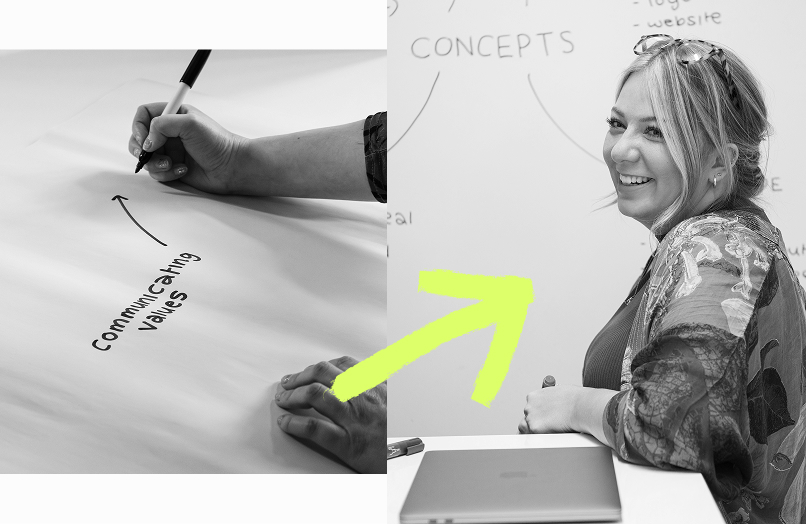
Start by establishing your objectives and working backwards from there. If you’re a B2B brand in a highly competitive category, start with clarity. What do you actually want your business to be known for? Not ten things. One or two that matter.
Then build everything around that by turning your people into confident, curious individuals within that arena.
Centralise activity.
Designate someone responsible for running the thought leadership programme at your business. They don’t need to be the expert, just the person who makes sure things don’t drift. They can help people to better their understanding of the target subject, and raise their profiles in this space.
This role requires a bit of push-and-pull. Maybe that person can build up a list of relevant events, conferences or webinars and then send them out to the rest of the business. Or maybe they can act as a sounding board for the ideas and suggestions that come directly from their team members. Ultimately, they’ll help guide any activity to ensure it's an effective use of time, when set against the overall objective.
Actually have something to say.
It sounds simple, but remember that if your thought leaders are just regurgitating what other people are saying, then they’re just adding to the noise. And equally, hot takes for the sake of attention aren’t much better.
The sweet spot is simple: curiosity, perspective, and experience.
Give your people the time and space to research and gather thoughts and ideas that will not only push the field forwards, but also provide real-world value to prospects and customers alike!
Don’t force square pegs into round holes.

Thought leadership activity comes in all shapes and sizes. It can range from simply being more consistently active on a network like LinkedIn, right through to targeting a keynote speaker spot at your category’s biggest event. It all contributes towards the overall strategy.
With that in mind, remember that everyone is different, and will be at different stages of their careers. If you have a team member who dreads public speaking, maybe start with a different type of activity and build from there. Likewise, if your best blog writer is constantly doing the rounds on the speaking circuit, maybe look to get them talking less and writing more. Where you can, play to your people’s strengths.
Encourage boundary pushing.
The caveat to the above: growth usually comes from doing things slightly before you feel ready. So, for that team member who hates public speaking, you could encourage them to start out by attending some relevant networking events, or book a speaking slot at a smaller, more local event, just to build confidence.
Over time, your thought leaders might start to feel more confident about being a voice within their chosen field. The more you layer it up, the more likely it is they’ll continue to improve.
Let individuals thrive.
Because you’ve got a set programme, there can be a real temptation to micro-manage everything that’s said or done in the name of your brand’s thought leadership. You should fight this temptation, or at the very least, resist its misguided pull.
Your people have their own voice, their own style, and their own approach to delivering their thoughts and sharing their takes. Let them have ownership of those things, with gentle reminders and prods towards your shared brand values and the overarching thought leadership strategy. This will keep them focused on contributing to the project, without stifling the things that make them who they are.
Your people build credibility. Your brand benefits from it. Their personal brand becomes associated with your business’ brand, and both are uplifted as a result.
When it’s all said and done…
When your people are visible, your business feels more credible. Not because they’re repeating the brand message, but because they’re showing real expertise in the real world. That’s what builds trust. And in competitive markets, trust is what wins.
Having renowned experts attached to your brand benefits both parties, and tells existing and prospective customers that, if they want to work with the best in the field, there’s only one organisation they should be talking to: yours.