Listening to Lisa.
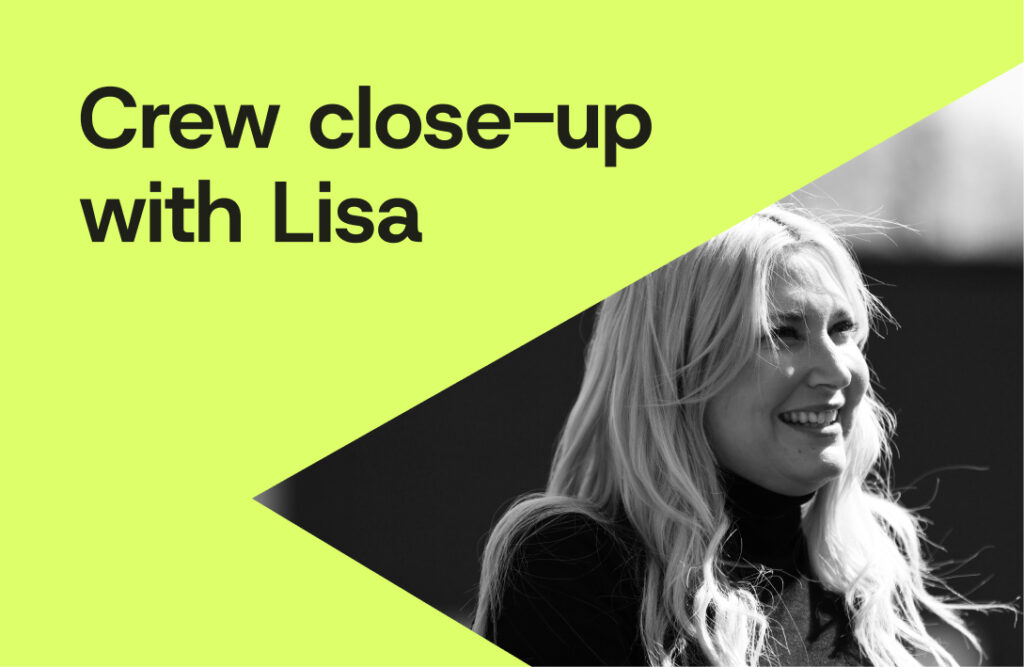
Curious what a brand manager – the Ketchup one, at that – thinks about, what keeps her brain going and more? Welcome to your inside look! Our copywriters are often caught up in the details of the day-to-day, but Lisa gave them a peek of the big picture. From strategies to conversions, find out what makes Lisa excel in her role in her recent KM Crew interview.
Expertise and approach.
Interviewer: Thanks for joining me, Lisa. We’ll start off with your expertise and approach: what do clients usually come to you for when something isn’t working, and what are they actually asking for without realising it?
Lisa: Often new clients come to us because they want to see more leads and sales. That's always the end goal, right? But often things are actually broken and need fixing in the background. At Ketchup, we get your basics working first. When we do our discovery with clients and find out about their tools, process, and really look under the hood, it can be a bit of a mess. We lift the bonnet, and there are lots of broken things.
There’s no point in driving people to a website if there’s no UX copy, targeted landing pages, etc. Chances are, they’re driving leads to the site but not converting because what’s in place now isn’t necessarily working. Clients forget about the power of the ‘always on’ stuff; BAU is about getting that right. It’s crucial to have things working in more places than just on the lead form page.
Interviewer: When that happens, how do you approach explaining it to clients?
Lisa: We care about every penny we spend. When we onboard a new client, we look for quick fixes and quick wins. It’s not about pulling everything apart – we also ensure they can see their ROI straight away. So we focus on that too, but it is important to get the basics right otherwise the client will spend all this time and budget to get leads which will do nothing. Before we do sexy, we need to do the basics.
Interviewer: Next, what’s a mistake you see brands make over and over with their marketing strategies?
Lisa: Potentially social. Clients often make the mistake of focusing on social as a core focus instead of a touchpoint. And with regards to the way they tackle social: there are tools they can use which are actually free that clients don’t always take advantage of. Social should be yes, brand-focused, but they should also be utilising their brand advocates. They're the real people behind the company. There’s a lot more power in social media strategy when it comes from the people who work there – that’s what people find interesting.
We understand real life events are very important, but often there’s a lot of focus on pre-event and no actual follow-up with those captured leads. This is an error brands make. They just give those leads to the sales team, but there’s not enough follow-up.
Another mistake I often see is that they’re not doing enough lead nurturing. There’s a lot of demand generation efforts to cast the net out, but what do they do with those people who are engaging? What activities and messaging are they getting?
Automations, too. Work flows and automations have different trigger points, so which should be their lead or priority list? They can set these up to support their strategy, and I see a lot of brands not taking advantage of it.
Interviewer: My next question: if you had to describe your approach in one word, what would it be (and what does that actually look like in practice)?
Lisa: As a brand manager, my approach is lots of face-to-face interactions. I get lots of energy collaborating and being in the room with people, and I think I can put anyone at ease in any role. I’m good at finding common ground, and it helps that I’m a very curious person anyway. As a result, I’m that person that others tend to come to for advice or support. I believe human connections are really key, and because of that I can get into the challenges of our clients easily.
Interviewer: Now, where do you think the best ideas really come from – structure, chaos, collaboration, or solitude?
Lisa: Collaboration and chaos. I work really well under pressure, and when I can get more creative, that brings me another level of energy. I also thrive on collaboration, so the webinar Chris and I did, for example, we couldn’t see anyone because that’s how events work on LinkedIn. That was weird for me. I like to see people’s reactions reflecting back. But the chaos side of that unexpected challenge is what kept me going.
Point of view and taste.
Interviewer: Now for a bit more on your point of view: what marketing trends are you quietly ignoring right now, and why?
Lisa: Chasing every channel but not getting the basics right. It’s better to focus on where the majority of your audience is, then you can layer the other ‘nice to have’s’ on top.
That ‘email is dead’ headline is also rubbish. We get leads from it all the time. It’s a core lead generator for so many brands.
Also, killing organic social because it doesn’t convert. It’s true that it’s really hard to directly link ROI with organic social. It isn’t necessarily the converting thing, but it needs to be part of your key activation. It’s just a case of it always being on in the background.
And another thing: overly polished curated organic social content. It feels genuine when it’s not overpolished – that’s what people really want to see: behind the scenes.
Interviewer: What’s something you have a strong opinion about in your field that others might disagree with?
Lisa: I strongly believe too much brand and campaign strategy is built around trends and what looks good in a 'deck' rather than what actually works in the market.
There’s often pressure to overcomplicate narratives or build new models or frameworks, when in reality the most effective marketing is often rooted in very simple, human insight and executed consistently. Some people see simplicity as a risk, but I see over-engineering as the bigger one, especially when audiences are time-poor and sceptical.
Interviewer: What excites you most about working with brands today, and what bores you?
Lisa: What’s boring is when the clients say they’re willing to try something new and then in reality they’re not. We can do amazing things together when they’re open to it. Of course some things will stick, some things won’t. But we don’t find out if the client isn’t open to trying. When we do find something that works really well, that’s when we can maximise it – and repurpose it. So openness is really the door that could lead to those bigger opportunities.
So specifically what excites me is when we can do some trial and error and A/B testing, or try something new like a different ad. If it’s not working, it’s about being agile enough to quickly change it. When the client matches our agility, it allows us to go on the full journey with them and achieve amazing things.
On the flip side of the coin, we do try to make sure any projects correlate as much as possible into ROI for them. But clients willing to have those open dialogues can achieve more overall. That's the only way brands can take themselves from here to HERE. It’s what innovators and entrepreneurs have all done.
Another thing I love is brands that understand their people are their best assets. People buy from people, experiences, nostalgia. A product is a product – it's what you create around it that creates real excitement. Show your humanity a little more.
Interviewer: What’s the project you’re most proud of that you’ve done with Ketchup?
Lisa: System Q’s Black Friday campaign. We onboarded this client very close to Black Friday. It was a very tight turnaround and took team effort to deliver, and the results were incredible: the client saw a 406% increase in web sales over four days. The campaign resulted in 567% growth in their total sales during the promotional period, and 78 leads generated in the Pro sector in December.
Collaboration and Ketchup perspective.
Interviewer: Now for collaboration: how does being part of a multidisciplinary team at Ketchup shape your work?
Lisa: I’m not an expert in design or copy, I am marketing; strategic. But having teams of creatives around me, other strategists, and even sales… everyone’s always upskilling and learning in their positions, so that absolutely helps shape anything I put in front of the client. Our plans and strategies are always shaped around the rest of the team. I’m learning from our crew all the time.
Interviewer: What’s something clients might not realise they get access to by working with Ketchup?
Lisa: The whole crew. We’re not an agency that hires their team away – we’re really proud of ours being open, collaborative, and diverse. That means there are no blocks to any part of the process, and the clients have access to all our varying talent. Therefore, communication is easy and things flow quickly.
Also, they get access to qualified marketers. We are not account managers, so they’re getting access to marketing heads.
Often in those cases, account managers don't let clients talk to the creatives at all, but we like being transparent and accessible.
Personality and human side.
Interviewer: Now we can dig into the personality stuff: what does your brain do when you’re not working?
Lisa: It never stops. I am a busy mum of two and my brain never stops. It's always in the mode of planning organisation, lists, constantly juggling the many plates of life. My brain is always tabs open, and I’m very good at multi-tasking. I’m chief organiser and event planner for everyone and everything. Being around water is what finally calms me down – that’s when I feel really at peace. But I work best in chaos, so I don't mind having 100 tabs open.
Interviewer: What’s a habit or ritual that helps you reset creatively?
Lisa: I'm competitive, so even when I try to reset creatively I still push myself – like even if I’m not working, I like a really good workout that pushes me to be better in that way. Then I’ll go for a sauna or a steam. I rarely get time to myself, which I enjoy, but it resets me when I do get the time. Traveling to anywhere with water also helps press that reset button. I definitely use my holiday time for that!
Overall, I get a sense of achievement from pushing myself.
Interviewer: If you weren’t doing this, what would you be doing instead?
Lisa: Good question. I think I'd be doing something to do with psychology or therapy. It comes back to how people-centric I am… People naturally open up to me, I think because I have an ability to make people feel at ease. That interest in psychology is also part of why I love marketing. I like exploring why we consume in certain ways, our buying behavior, patterns, and the human mind in general.
But farther back? A dolphin trainer.
With that, our copywriter became giddy about her same dolphin trainer dreams, but eventually wrapped the interview. To learn more about Lisa or any other team members, you can visit our Team page. We’ve got plenty of content from videos to interviews just like this one, and we’re a diverse crew!