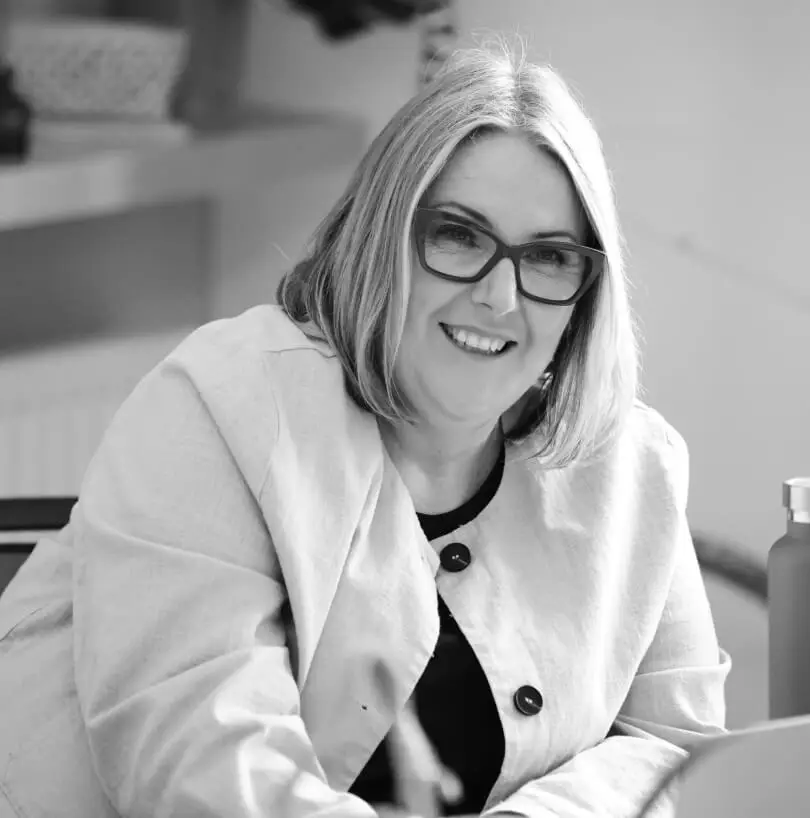
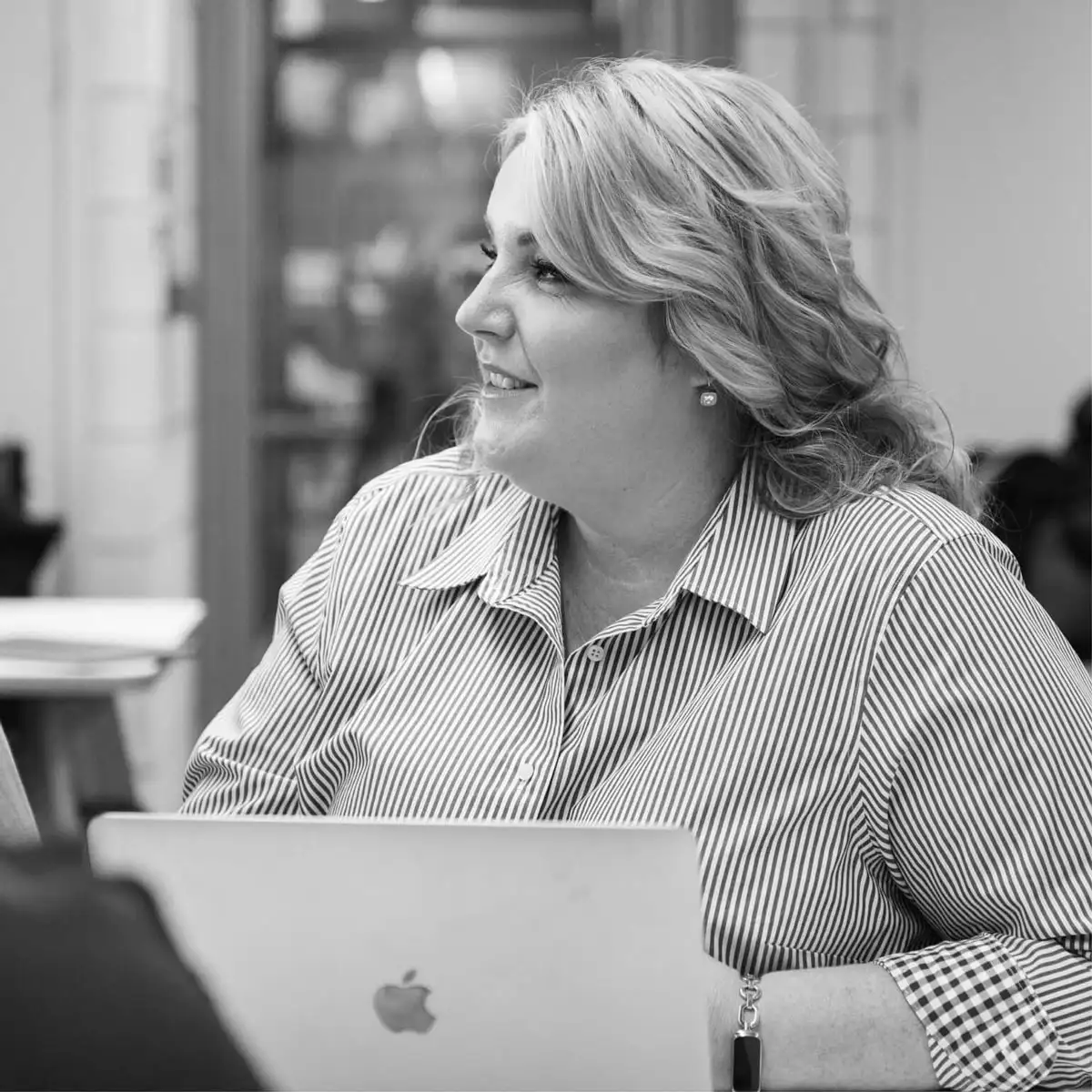
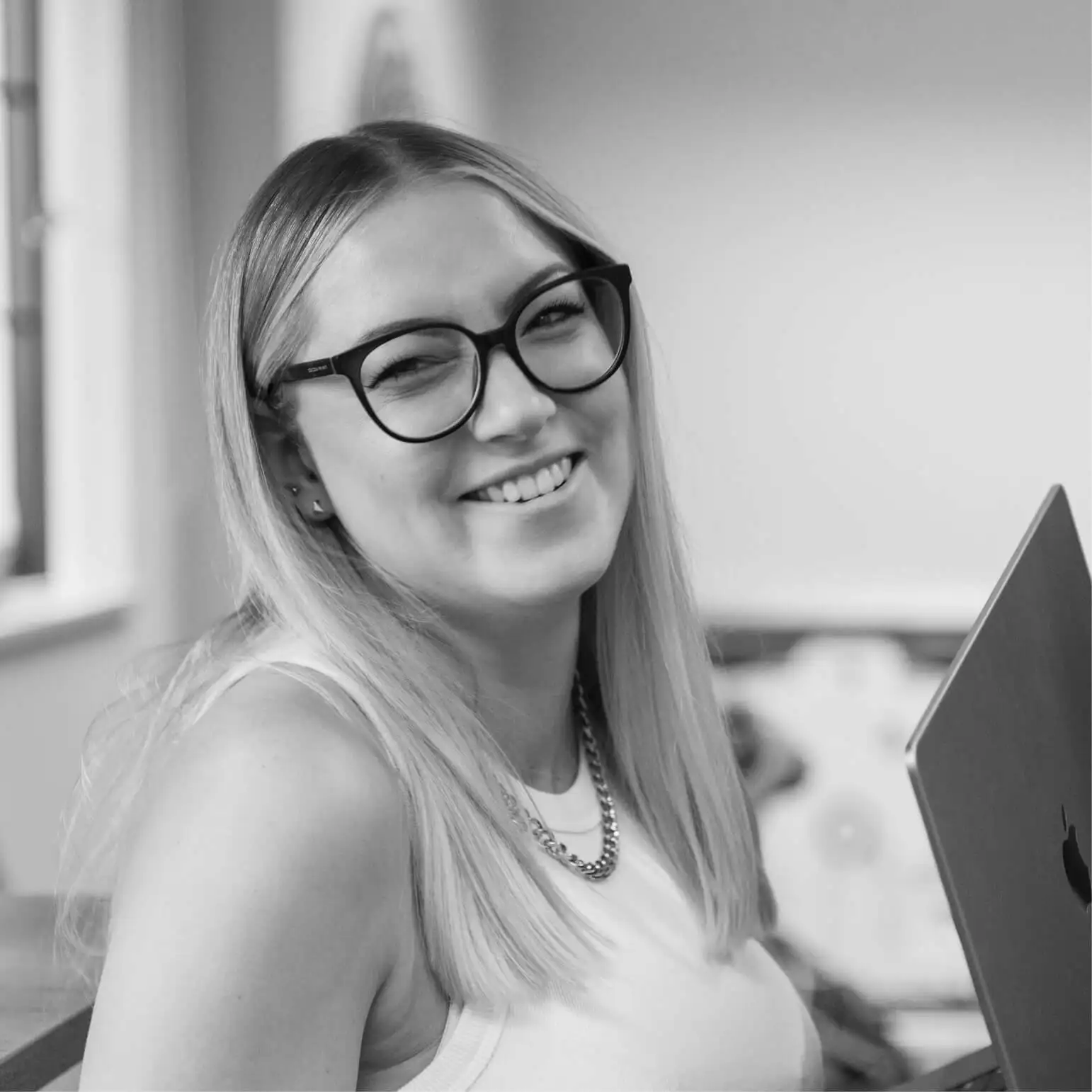
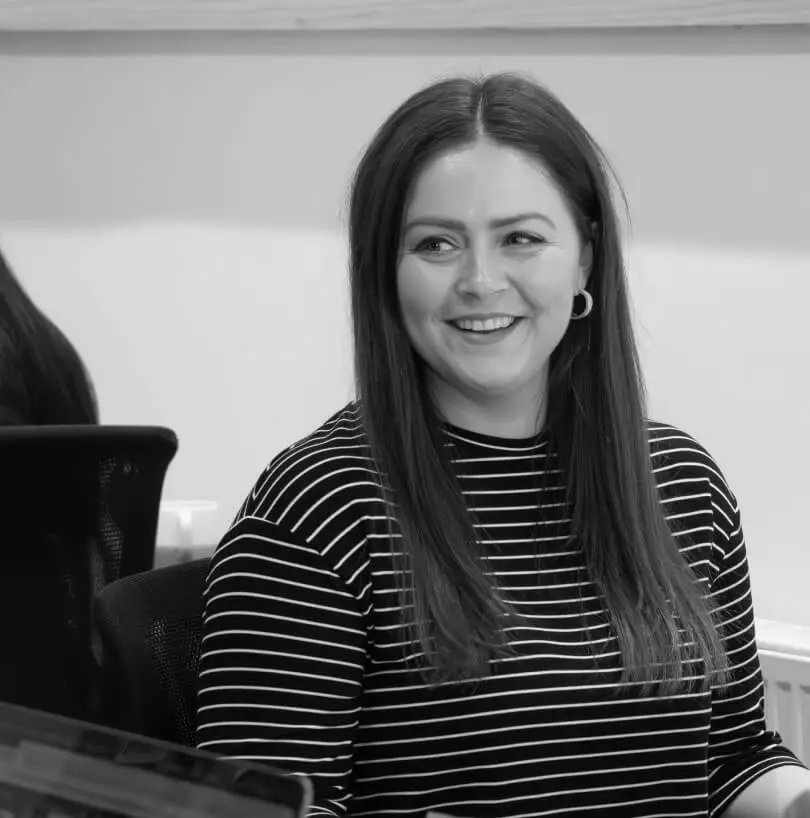
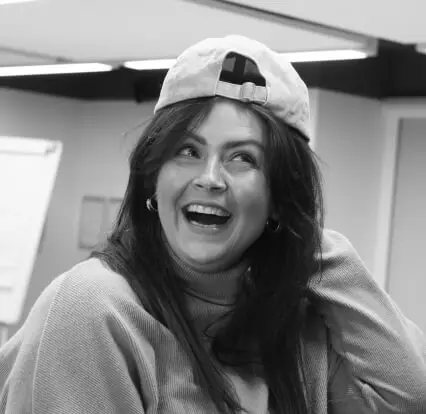
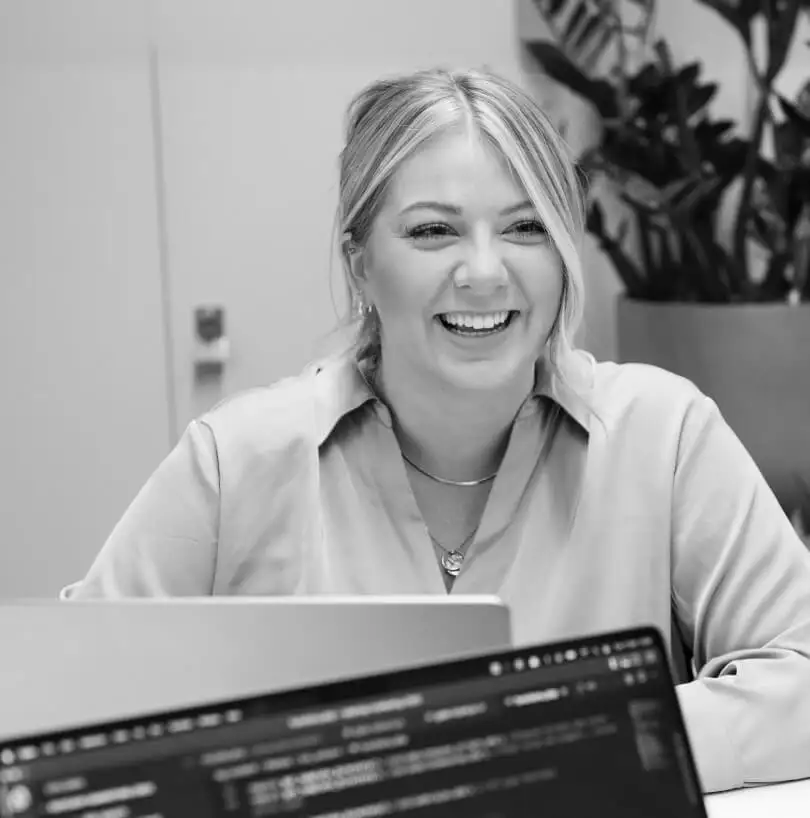
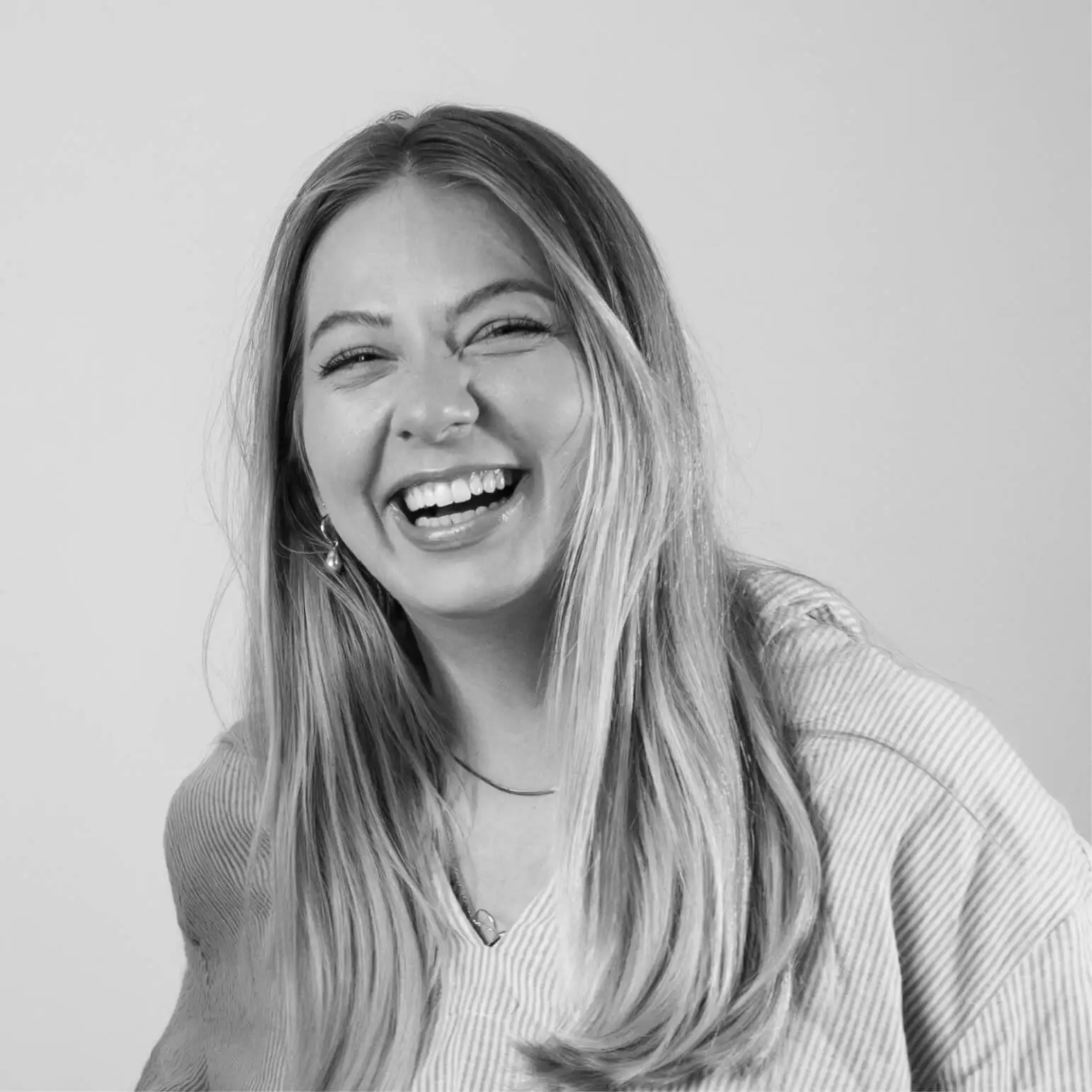
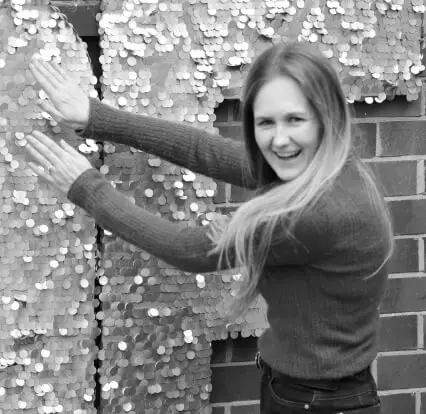
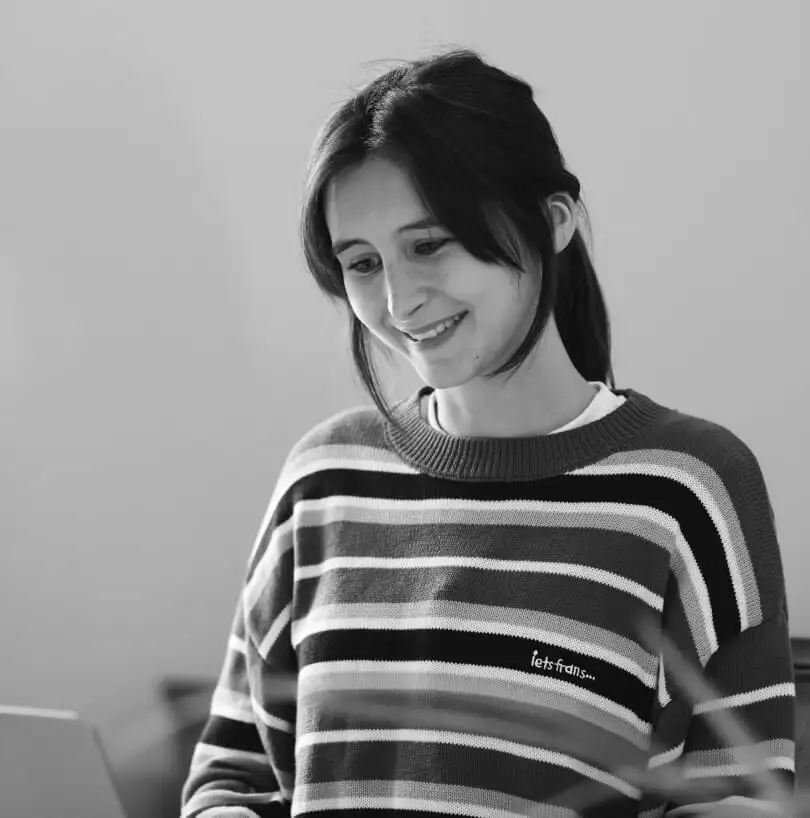
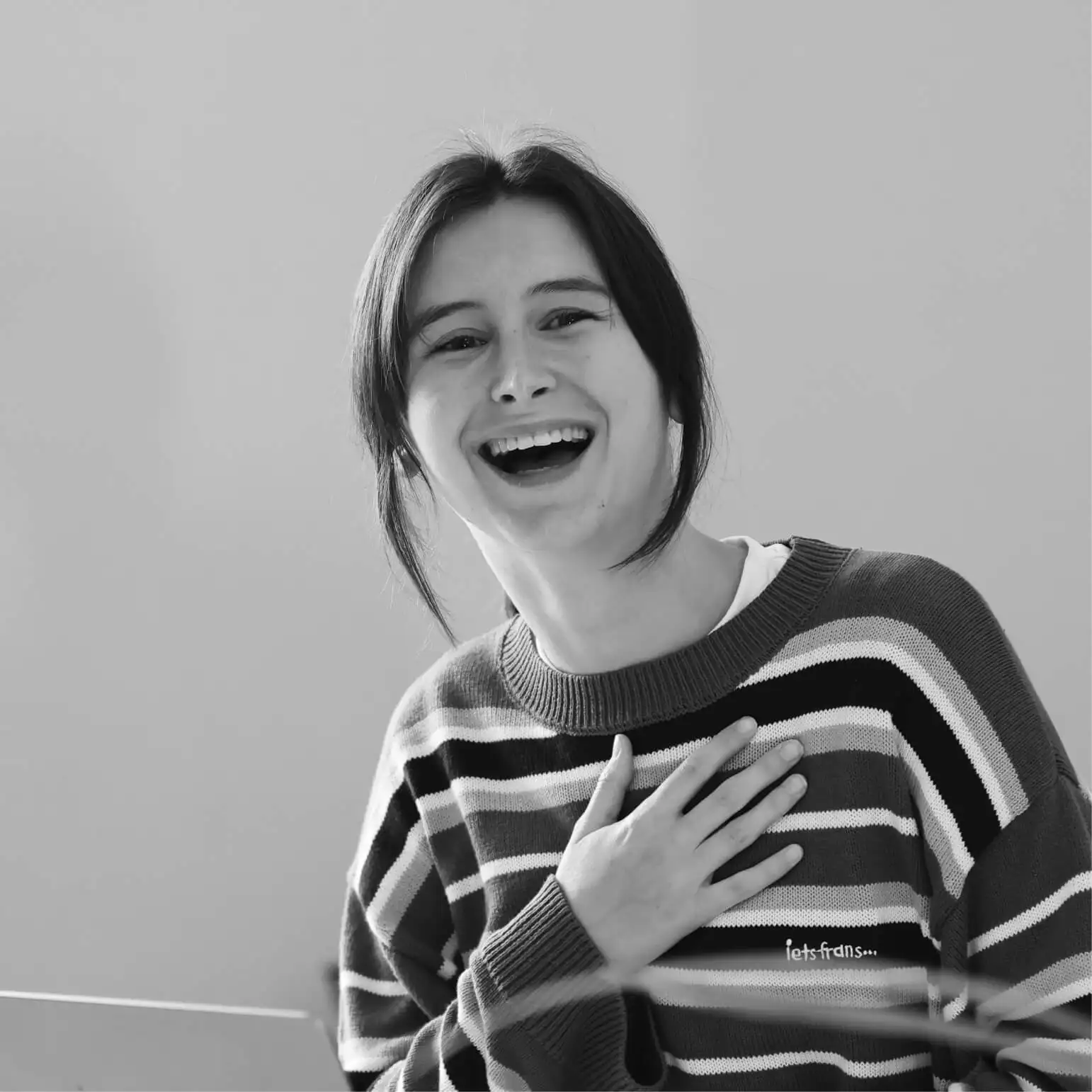
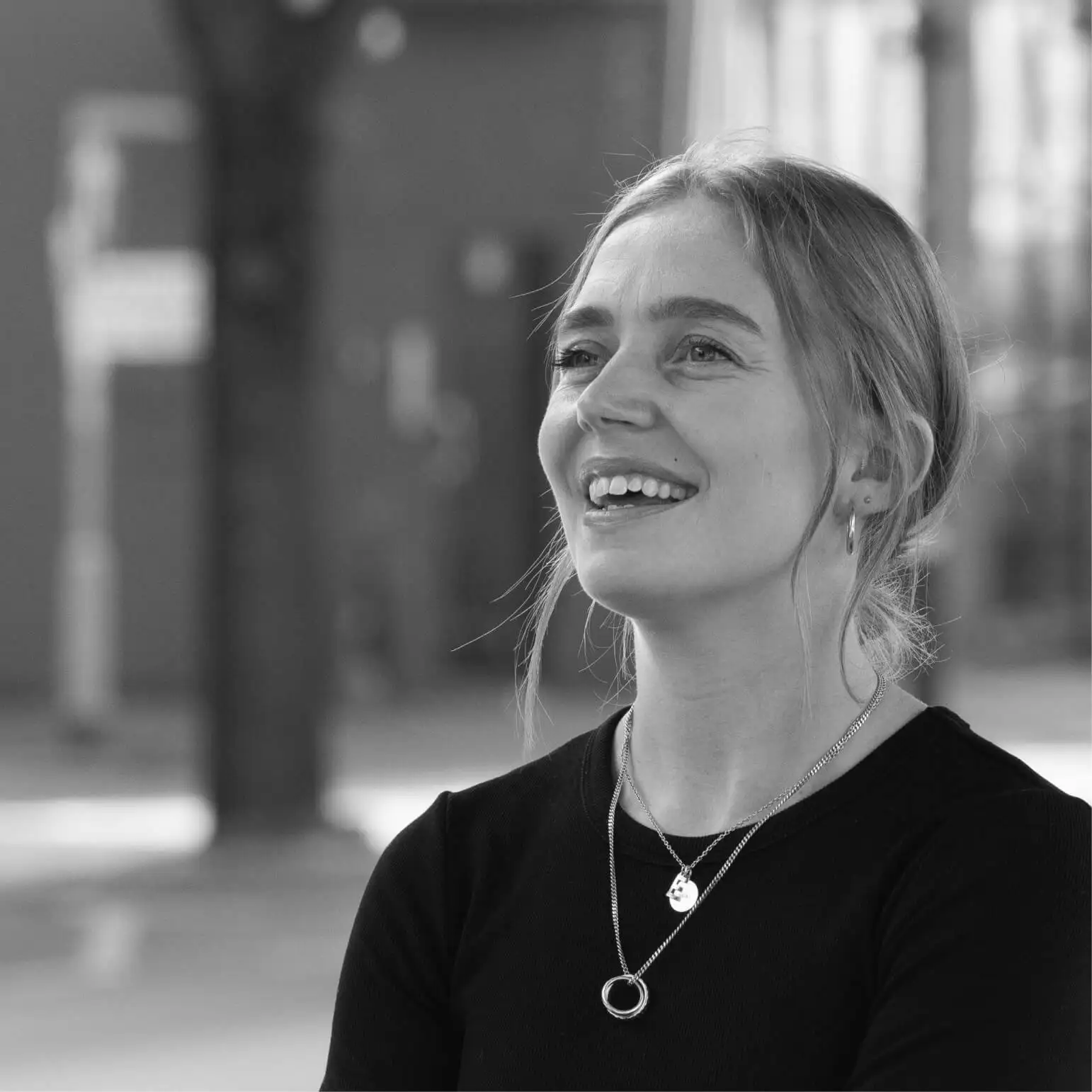
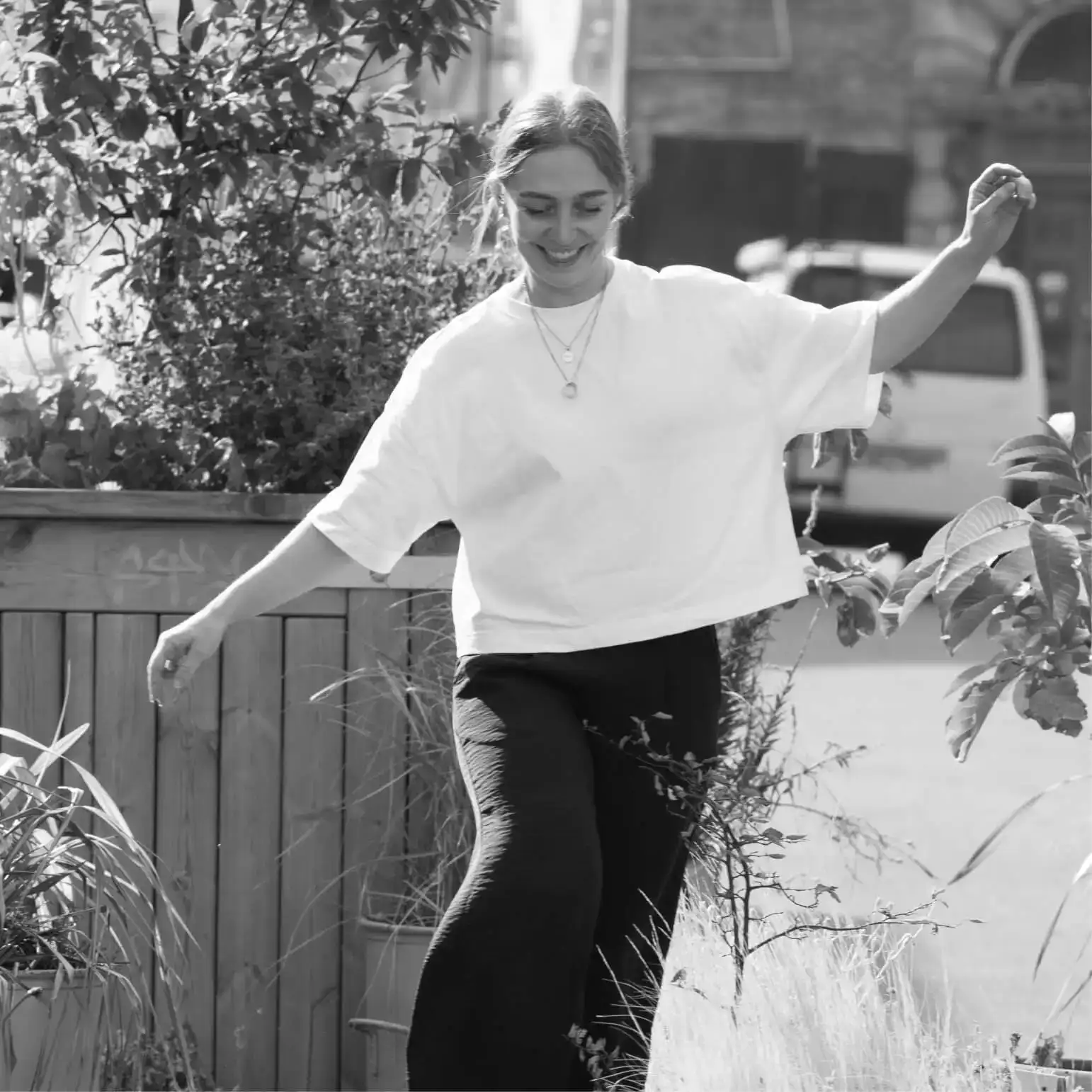
Close-up with Kitty.
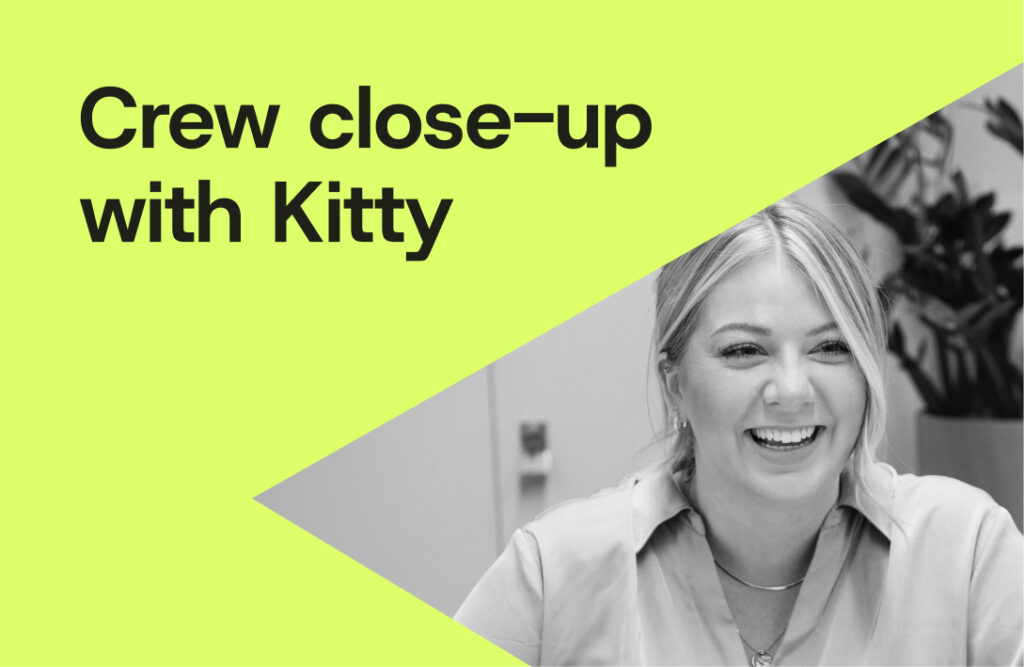
What turns the wheels and cogs of a designer’s mind? One of our copywriters grabbed some time with Kitty to find out. From storytelling and strategy to chaos-driven creativity, here’s what we learned about the thinking behind her work, and what makes her so good at what she does.
Expertise and approach.
Interviewer: Thanks for doing this, Kitty. Let’s start with your expertise and approach. What do clients usually come to you for when something isn’t working, and what are they actually asking for without realising it?
Kitty: The thing I get asked about most by clients is storytelling. How to find it, and how it shows up on a website, in a campaign or as a brand. It also happens to be the thing I get excited to get my teeth stuck into.
Often I’m extracting a story from almost nothing, with minimal information, or clients are worried they sound like everyone else. I’m skilled at taking that initial information and turning it into brand strategy, which then becomes brand work or a website. And that’s usually led by the narrative and the customer journey.
Most of the time, they don’t actually know what they need until they’ve been shown it. And then it becomes really apparent.
Interviewer: What’s a mistake you see brands make over and over again in design?
Kitty: The most common thing I see is brands going for trend-based designs rather than who they actually are.
A rebrand might be beautiful and really trendy, but it isn’t timeless and it doesn’t represent who they are. That’s why we always figure out who they are first before we design anything.
Otherwise, it’s just a pretty surface with nothing underneath.
Point of view and taste.
Interviewer: If you had to describe your approach in one word, what would it be? And what does that actually look like in practice?
Kitty: Resonant.
It works on two levels: I have to resonate with my clients by bringing out the best in their brand and their ideas, but at the same time, I also have to make sure their audience feels a connection too.
It has to make sense to everyone.
Sometimes what the client thinks they need isn’t actually what their audience needs. So the goal is getting to that shared understanding. It’s about satisfying the reason why something exists in the first place and using a curious approach to get there.
If something doesn’t resonate, we keep digging until we find what does.
Interviewer: Where do the best ideas really come from for you: structure, chaos, collaboration, or solitude?
Kitty: Definitely chaos.
Ideas come at completely random moments. I might be driving in the car and have to ask Siri to write something down, or I’ll suddenly think of something in the shower.
Unexpected moments are where the best ideas come from.
Being somewhere new can spark ideas, too. Sometimes not immediately, but the inspiration shows up later.
My brain’s kind of always on. I’m always looking for the next big idea to put in my back pocket. I’ll take photos of interesting packaging, save fonts I like, or notice little design details in everyday places.
Interviewer: What design trends are you quietly ignoring right now, and why?
Kitty: Honestly, the majority of trends.
They come in and out of style so quickly. When someone’s paying a lot of money for branding or a website, they don’t want it to feel outdated in a few months.
Nostalgia trends can be fun for campaigns, but for brand and web work I try to avoid leaning into trends too heavily. It’s better to take them with a pinch of salt and focus on something that will last.
Interviewer: What’s something you have a strong opinion about in your field that others might disagree with?
Kitty: Probably quite a lot!
One thing that comes to mind is how quickly creative roles get siloed into one field of expertise. You’ll see titles like UX designer, brand designer, and so on. At Ketchup, this works well for us. We have experts in specific areas, but we also lean into our adjacent interests to spark ideas, fuel creativity, and maximise our input into a given project.
That way, none of us feel we’re limited or boxed-in. We get opportunities to show what we can do, and to grow our skills, passions, and ability within the creative field.
Most creatives I know have a bunch of overlapping skills. It can be helpful to have at least some understanding of the things around your discipline.
Even if you’re not the expert in everything, understanding how other roles work makes collaboration easier and helps you know when to bring in the right specialist.
I’m also quite curious by nature, so I like learning about those overlapping areas anyway.
Interviewer: How do you feel about AI in the creative process?
Kitty: I’m a fan of AI, but not for designing things.
It’s great for idea generation, research, and doing tasks you don’t really want to spend time on. Things like structuring research pages or organising information.
But the actual design work should still come from people. Humans are where bespoke creations come from – AI has simply copied what it knows from us! And people can read in-between the lines, unlike machines.
Interviewer: What excites you most about working with brands today, and what bores you?
Kitty: It’s two sides of the same coin.
What excites me is when brands are open to wildcard ideas – when they’re willing to take a bit of risk.
When brands are too restricted, it can be frustrating because some of the best ideas never even get seen.
Collaboration and Ketchup perspective.
Interviewer: How does being part of a multidisciplinary team at Ketchup shape your work?
Kitty: It’s always been really interesting.
From day one I was working closely with the web developers, and understanding code (even though it was challenging at first) gave me so much knowledge about how websites actually function.
That understanding really feeds into the design process.
It’s the same with every discipline here. Everyone is always sharing insights, whether that’s tone of voice from the copywriting team or technical insights from developers.
Every day is a school day.
You also get so much value from everyone’s life experience – different generations, cultures, and backgrounds. It helps bring out the best ideas from the whole team.
Interviewer: What’s something clients might not realise they get access to when they work with Ketchup?
Kitty: The depth of expertise behind the team.
Clients might look at us and think we’re just selling a service, but there’s actually so much more behind it.
Everyone here brings years of experience and knowledge from different industries, whether that’s fashion, beauty, food, or something else entirely.
That collective insight feeds into every project.
Personality and human side.
Interviewer: Let’s talk about the personality side of things. What does your brain do when you’re not working?
Kitty: It’s still on, to be honest.
I’m always looking for the next big idea, even when I’m not trying to. Or quietly judging design in the real world… like noticing the misalignment on a restaurant menu.
My partner finds it funny (and perhaps a little irritating sometimes).
But there’s always something design-related going on in my head.
Interviewer: Have you always wanted to be a designer?
Kitty: Pretty much.
By the end of high school I knew that’s what I wanted to do. I was always doing something creative – painting, illustration, photography.
I ended up choosing Graphic Communications, Fine Art, and Business Studies although I also wanted to study psychology because I've always been interested in understanding how people's minds work.
There’s definitely a psychological element to branding and storytelling.
At one point I was torn between graphic design and book covers or illustrations.
My mum actually said I’d make an excellent lawyer. It’s funny because in some ways it does link back to storytelling and making a strong case through branding.
Interviewer: What’s a habit or ritual that helps you reset creatively?
Kitty: I try to move myself into quieter spaces, because my brain is always quite busy.
One thing that helps me switch off is reading rom-com books. They’re light and easy, but they still let your imagination work – you’re picturing the characters and the scenes.
Getting outdoors helps, too – and I’ve been doing this more lately since I got my puppy, Tilly! Long walks, fresh air, listening to music or a podcast. Sometimes I’ll just walk for hours without talking to anyone.
It forces my brain into a quieter space.
And a spa day never goes amiss either. A little pampering always helps.
Interviewer: If you weren’t doing this, what would you be doing instead?
Kitty: Probably something related to book covers or book illustration. That creative space still really appeals to me.
And with that, they wrapped the interview. To learn more about Kitty and the rest of the crew, visit our Team page, where you’ll find more interviews, videos, and behind-the-scenes insights into the people behind Ketchup.