Elements of Ellie.
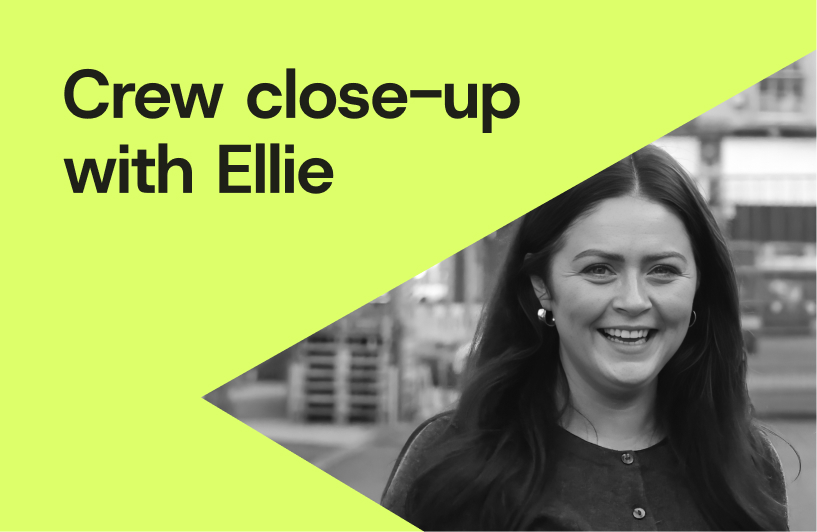
Wondering where brand managers get their best ideas and strategies from? That’s exactly what we sat down to find out with Ellie, one of the Brand Managers at Ketchup, plus her proudest moments and much more. Read all about what we uncovered as we explored the different elements of Ellie, and why she’s great at what she does.
Expertise and approach.
Interviewer: Let’s start by getting to know your expertise, and what your approach would usually be. What do clients usually come to you for when something isn’t working, and what are they actually asking for without realising it?
Ellie: It can vary depending on the client. I think there are three different situations, really, which would each merit a different approach:
- When clients don't know what they want, our job is teasing that information out of them with a deep dive into who they are as a brand, what their goals are, etc.
- When they know what they want and we do our due diligence to make sure they’ve thought of everything and that we understand everything – and build on their ideas from there.
- When they have something running that isn't working. Sometimes clients are running a campaign, for example, and it's just not delivering the results they expected. That’s when they come to me for advice and knowledge to fill the gaps on what’s missing.
My approach is always to understand what the client needs and how this one thing may impact everything else in their business.
Sometimes clients don’t know what they want or need out yet, so it’s about asking the right questions and staying curious to get as much information as I can to help them – either with a call or a face-to-face meeting.
Clients that need support with projects sometimes come to us with a specific thing in mind, so they tend to know what they want from the beginning. We look at things holistically, so even when the client is clear on what they want, it's still worth getting on a call or meeting in-person to make sure we're on the same page.
Interviewer: What did you do before this?
Ellie: Across six years, I was a sales and marketing assistant in-house and a marketing manager, amongst other roles in-between, before becoming Brand Manager at Ketchup. When I first started, I was able to work really closely with Michelle and learn from her. It was the best thing for me. Do you know the story of how I ended up working here? How at first, I turned it down?
Interviewer: Really? No, I don’t think I’ve heard it. What happened?
Ellie: I’d been made redundant from my job before Ketchup and was out of work when a friend told me about this job. Michelle was looking for a Brand Manager, and I got an interview. So I have like, no confidence at all, so when we got to the final interview where they’d given me a mock client and I was supposed to present my strategy back to them, I got so in my head about it that I decided this role just wasn’t for me.
I sent them an email telling them I wasn’t the right fit, and later that day I got a call from Michelle.
She said, “What happened?” And I told her I didn’t think I could do it.
She asked, “Well, what would your answer have been?”
And I told her. She said, “That’s it. That’s what we were looking for.”
From that experience, I’ve learnt that no one knows everything; we're all always learning. And I'm lucky I have a great team to learn from at all times!
Interviewer: What’s a mistake you see brands make over and over in their marketing strategies?
Ellie: Overcomplicating things. For me it’s about getting the basics in place first; establishing a solid foundation, making sure it’s consistent, and then building from there. Clients always want to do the big sexy campaigns or ads, which really is the sprinkles on top of the trifle. There’s no point in those if they don’t have the basics in place. It’s like putting the roof on the house when you don't have the foundation sorted, and overall trying to do too much and being spread too thin.
Interviewer: And for your approach: if you had to describe it in one word, what would it be (and what does that actually look like in practice)?
Ellie: I have great communication and I think that’s what helps me build relationships with clients. A good client relationship is crucial to success in my role! Two of my clients, big ones, are polar opposites, and I can get on very well with either. I have a personable approach and adapt to the person. I’ll find relatable things with each of them. I think I’m able to access that human side of people which helps when you’re on site with them; I’m quite empathetic. I try to figure out the person and how I’ll get the best out of them.
Interviewer: Where do you think the best ideas really come from when you’re working – structure, chaos, collaboration, or solitude?
Ellie: If I'm being really honest, most of my ideas come either in the shower or the toilet!
I love collaboration because someone else adds to my idea and then you build it as you go along. Or someone else throws an idea out and I can then build on that.
Point of view and taste.
Interviewer: So, moving on to trends and POV: what trends in marketing are you quietly ignoring right now, and why?
Ellie: I want to say AI, but to a point. There is a place for it when it comes to efficiency – I’ll use it for meeting notes, for example. But it does bother me when someone’s work has been churned out by AI and you can tell. There's a time and a place for AI but you definitely need to ensure there's human intervention, so sense checking and editing what it gives you.
Interviewer: What’s something you have a strong opinion about in your field that others might disagree with?
Ellie: I have a really strong opinion on marketing being consistent. It’s not exciting or ground-breaking, but actually the impact you make when it’s consistent is so big. A lot of people get that bit wrong. So BAU (Business As Usual) stuff. Even a big campaign should feel similar to other marketing activities – it should all feel like one brand. And that’s where your efficiencies come in because some of those bits can be re-used again and again.
Interviewer: What excites you most about managing brands today, and what bores you?
Ellie: What’s exciting is seeing the impact you make; sometimes you feel you’re in the trenches, which can be overwhelming, but as you start seeing the outputs and responses… and then you get to look back and see how far you’ve come.
And seeing things come to life – the stand design for Starrett for example – is so exciting. From designing it to being there in-person, you get to see the full life cycle.
What I find boring: I don’t know; often I think even the dullest sectors have something interesting about them. Like a nice team, or just knowing you’re helping people progress. I'm a bit of a nerd and love understanding how things are made so even the most boring products, I find interesting learning about.
Too many rounds of amends, that’s boring! When progress is slow, or I’m not getting the gratification of results just yet, I suppose.
I often have to come up with ideas on the spot at client meetings, so as much as I might have prepped they still throw curve balls. That keeps things interesting.
Interview: Can you talk me through what you did for Starrett’s stand?
Ellie: We worked with a stand builder who gave us an initial layout. We then became the liaison between the stand builder and Starrett to create a layout we and Starrett were both happy with.
Essentially we got to the point where we told the stand builder what we wanted and where. Then, they drew it up so we could get it approved with Starrett. Even this was well thought out – thinking about space on the stand to move around, having enough space around the demo bench for safety, etc. Michelle, myself and the client had to think about practicalities, and then we briefed the design team on how we wanted it to look.
The stand builders came with all our artwork and built the stand at the event; we organised the show, health and safety, stand design, giveaways, leaflets, the whole thing. That was so exciting because we were there on behalf of the client, and we were hearing Starrett, event organisers, and potential customers saying it was the best stand they’ve ever had.
Collaboration and Ketchup perspective.
Interviewer: Thanks for that. Now moving into Ketchup-specifics: how does being part of a multidisciplinary team at Ketchup shape your work?
Ellie: It gives a more holistic view. Since most of us are in the office a lot, even if some people weren’t initially going to be part of the project they may pick something up in conversation. So they can chime in and find ways we can make it even better. A holistic view helps you think of different ways of doing things. It keeps things fresh.
Interviewer: And what’s something clients might not realise they get access to by working with Ketchup?
Ellie: A whole team of experts. All clients are different – some will use one department more than others, but they might not realise we do copy, design, and PPC too, for example. Usually a project is solely creatively-driven or tech-driven and they don't realise we also do one or the other.
Interviewer: What’s something you’re super proud of that you’ve done with Ketchup?
Ellie: That I’m still here five years in – especially since I turned the job down at first! Every agency says they’re different, but I think we really are. We’re really nice, approachable, and genuinely care about the clients.
I’m also proud of the client relationships I’ve built; it's nice seeing things I’ve worked on out in the wild. It’s not my actual work – it’s the creative team’s actual work – but I love seeing how I can be the first person the client calls who can help them.
Personality and human side.
Interviewer: Now for the personality stuff: what does your brain do when you’re not working?
Ellie: It absolutely never stops; I was up at 4 am today thinking about something I had to do. Even on holiday it takes me a few days. I do try and get that break, though.
Interviewer: What’s a habit or ritual that helps you reset? In other words, do you ever stop?
Ellie: If I'm working from home, I try to finish my day and then go for a run so I can switch off a little. It’s always either the gym, tennis, or running. I used to be able to run a half-marathon before COVID so I’m trying to get back up to that.
Interviewer: And finally, if you weren’t doing this, what would you be doing instead?
If not an agency, it would be in-house. If not marketing, I’d be doing tennis coaching. I like the idea of being active, and always moving around.