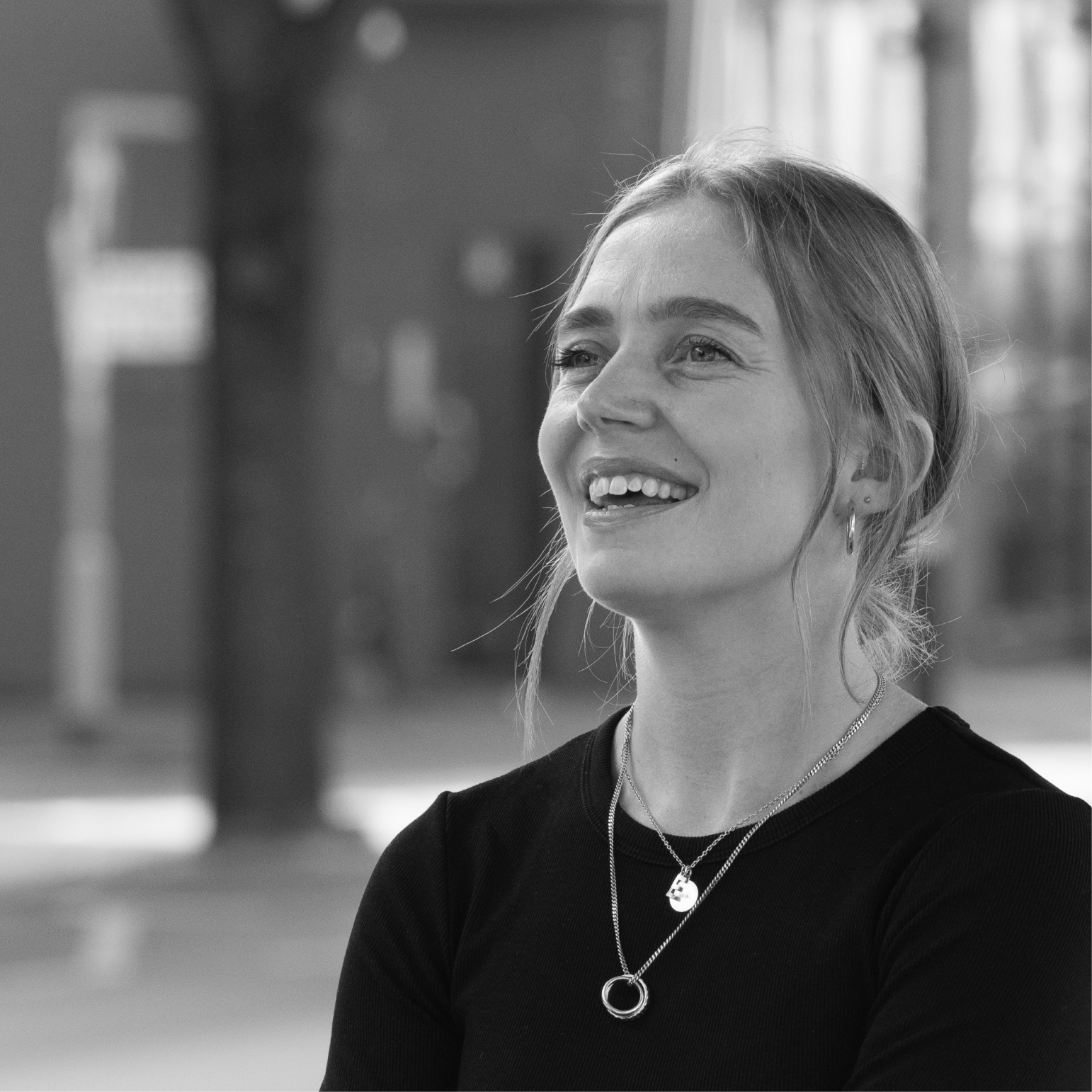
Catching up with Chris.

One of our copywriters sat down with Chris, our SEO Manager, to learn all about what makes him shine in his role – as well as in his off time. Find out what they learned as they got the coffee pouring and the conversation flowing.
Expertise and approach.
Interviewer: Thanks for sitting down with me, Chris. Let’s start with your expertise and approach. What do clients usually come to you for when something isn’t working, and what are they actually asking for without realising it?
Chris: They tend to come to me when they’re not getting traffic to their website, or when they’re running a PPC campaign that is not converting in a way that they would like. They’re usually spending lots of money and not returning enough revenue.
However, what they’re really asking for is brand visibility. At the end of the day, that’s what it is that they need. It isn’t just traffic they’re after.
Interviewer: Right, that makes sense. And when these brands come to you, what’s a mistake you see them making over and over with their SEO?
Chris: Lots of them are still stuck in 2010 – thinking it’s all about keywords when really it all links back to their brand. SEO is not just about on-page content, it's about brand repetition and consistency. There’s a bigger picture that all the pieces come together for: the company as a whole instead of just robotic, keyword-filled articles.
Interviewer: And for your approach: if you had to describe it in one word, what would it be (and what does that actually look like in practice)?
Chris: I like to focus on clear communication to our clients’ end users or customers. And of course, communication to search engines.
Interviewer: How has the introduction of AI shifted your role lately?
Chris: It’s made it less about traffic, and more about citations and summaries. So it’s more about how you provide value to users and search engines. There’s been a real shift in resources rather than product. Articles will now rank higher than service and product pages, for example. We’re all moving away from e-commerce-style sites – now, the goal is curating higher-quality content onto our websites.
Google is letting Amazon and eBay fight over e-commerce, whereas Google wants to be the resource for people’s questions. Remember the phrase “just google it?”.
Interviewer: Where does that leave the actual question-based sites like Quora and Reddit?
Chris: Quora and Reddit are an integral part of AI visibility; so AI crawls both to get the questions and answers. That’s where authority comes into it. But that’s also why AI gives rubbish answers sometimes, as it doesn’t always know right and wrong. When AI gives completely the wrong answer, it is known as AI hallucinations, and a lot of this comes from crawling user content.
For example, if a doctor came out with a wrong answer, AI would believe it because that doctor would have more credibility with certain questions. But if you or I put an answer on there in that field, AI wouldn’t cite ours – even if ours was the right answer.
LinkedIn articles help us be more credible, by the way – that’s why they’re so important. If you have an article in another, credible publication, then you immediately boost your credibility and rank a lot higher.
Interviewer: Some real intricacies there. Let’s get more granular with your working style, too. When it comes to day to day working, where do you think the best ideas really come from – structure, chaos, collaboration, or solitude?
Chris: 100% Chaos (and I think my team would agree).
Point of view and taste.
Interviewer: Moving on to trends and your point of view: what trends in SEO are you quietly ignoring right now, and why?
Chris: Voice search
Interviewer: On ChatGPT or Google or everywhere?
Chris: Everywhere. So little is known about AI search in general, so there’s no way you could adapt voice search without making it up. You’ll spend so many hours adapting that you might as well just search it normally.
The takeaway: it changes daily, so if we tried to adapt it today we’d have to then adapt it again tomorrow. So is it worth it? No, not in my opinion.
Interviewer: You mean adapt the algorithm?
Chris: Yes, because the algorithm is different with voice AI, and not a lot of people understand that.
Interviewer: What’s something you have a strong opinion about in your field that others might disagree with?
Chris: People writing websites and content purely for AI versus organic search. You could do all your articles with a proper Q+A structure, but it wouldn’t be to your benefit. You also need the other type of format where you just write.
Also, on-page keywords aren’t a thing anymore. Keywords in the articles aren’t relevant in terms of search. It’s the related topic, not the keyword, that’s relevant. So there’s no need to do the exact word-for-word keyword implementation anymore in the content writing.
Interviewer: Has the relevance of internal and backlinks changed with AI?
Chris: No, internal linking and backlinking have stayed the same; it’s still important to include these in your content.
Interviewer: What excites you most about working with brands today?
Chris: SEO is now multifunctional with brands, so all the different aspects of digital marketing are no longer siloed. SEO now factors in brand logos, Google reviews, brand repetition, etc. You could write the best piece of copy you’ve ever written but if it’s not on social media, there’s no credibility or authority behind it. That need for an online presence now ties in with SEO, and I love that. It enables me to work with marketing teams and client employees, too.
Collaboration and Ketchup perspective.
Interviewer: Now let’s get into Ketchup-specifics: how does being part of a multidisciplinary team at Ketchup shape your work?
Chris: I get feedback from multiple experts and SEO has advanced so much that all opinions matter. It’s no longer that I could write an SEO-only article. The web team gets involved, the copy team gets involved… so we all work together more.
Interviewer: And what’s something clients might not realise they get access to by working with Ketchup?
Chris: Expertise in all departments. If you sign up with an SEO expert, you get expertise from other teams that you won’t even see happening in the background.
Interviewer: What’s the project you’re most proud of that you’ve done with Ketchup?
Chris: Working on a pitch for a safari park (and winning it). That was all my team. We went on site, because who wouldn’t like going to a safari park? That’s everybody’s dream.
Interviewer: Absolutely. Now for the personality stuff: what does your brain do when you’re not working?
Chris: It switches off of work mode and falls into adrenaline/sports mode. It’s another way to mentally stimulate. My first thought outside of work is always sports-related – it’s definitely a nostalgic pastime for me.
Interviewer: What’s a habit or ritual that helps you reset mentally? In other words, do you ever stop?
Chris: Running. I know if I’ve not gone for a run because I get really stressed if I haven’t gone. I go every day. I went more in January if anything – I like the fresh air. If I’m outside, it resets my endorphins. Winter is bad enough, so going outside helps.
Interviewer: Running outside in January is impressive. That’s certainly rising above what we can’t control! My final question is: if you weren’t doing this, what would you be doing instead?
Chris: I’d be chasing my dream of being a footballer.
And with that, we concluded the interview and the copywriter walked away feeling a little SEO-smarter that day.